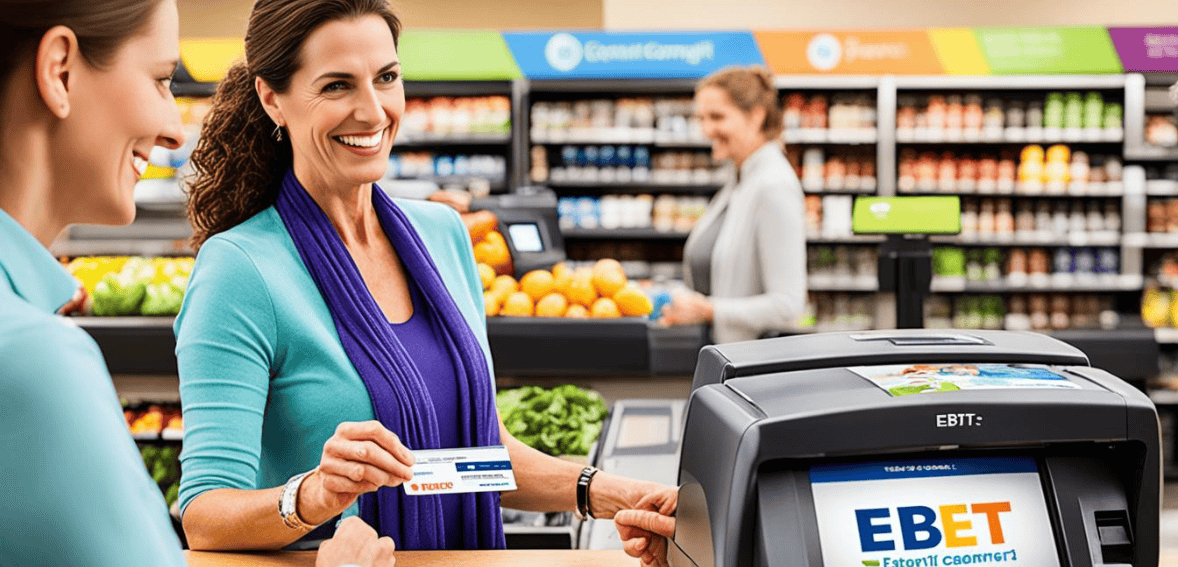
If you’re a business owner looking to increase your customer base and boost sales, accepting EBT payments is always a smarter move. Today, the way everyone pays for daily necessities is different from the past. This is because, as the number of people using SNAP benefits, EBT has also undergone a shift to match that change. To accept EBT, your business must sell approved and authorized items by the USDA.
Therefore, if you would like some information on accepting EBT, it may lead to new customers. It will also increase foot traffic, as well as present an opportunity to show your community support and be inclusive.
In this guide, you will learn about the types of businesses that can accept EBT, eligibility requirements, benefits, and how accepting SNAP will benefit both the business and the local community.
What Is EBT?

Electronic Benefits Transfer (EBT) is an electronic payment system created and managed by the government that provides benefits to people who meet the program’s requirements. They are usually used to help low-income households purchase food by providing money through the Supplemental Nutrition Assistance Program (SNAP). EBT is usually received in the form of debit/credit cards, which are preloaded with money each month to give purchasers the ability to purchase approved food without using a paper food stamp. In addition, the system will help people to purchase only eligible foods while maintaining a higher level of dignity when they make their purchases.
What Does It Mean to Accept EBT?
To accept EBT, a business must be authorized by the USDA’s Food and Nutrition Service (FNS). This approval allows merchants to process SNAP benefits for eligible food items using an EBT card, which functions like a standard debit card. Customers enter a secure PIN at checkout, and SNAP-approved items are covered automatically.
EBT payment acceptance is regulated to ensure benefits are used appropriately. Businesses must meet these specific requirements:
- Selling approved SNAP-eligible food categories
- Using compliant point-of-sale (POS) systems
- Following federal SNAP program guidelines
While this may seem complex, the process has become significantly more streamlined.
Businesses That Are Choosing to Accept EBT
The approval to accept EBT is not just about compliance with any government regulations. It can be seen as a great way for businesses to grow their revenue. SNAP customers represent a stable and loyal consumer base. Many EBT-eligible industries are accepting it as a way to establish themselves as inclusive of all their customers. Some of the businesses that can accept EBT are as follows:
1. Grocery Stores and Supermarkets
The most common industries that accept SNAP benefits are grocery stores and supermarkets. The stores automatically fulfill the USDA eligibility requirements. They provide basic food products, which include all types of fresh meat, dairy, and cereal products.
Most stores require only minor changes to their operations as they can process EBT payments. People use their benefits every month to buy essential items, which creates a pattern of shopping behavior and establishes EBT payment systems. Supermarkets depend on EBT as a steady income source, as their customers maintain consistent shopping patterns with equal basket sizes.
2. Cultivator’s Markets
This market provides a vital service to the community by supporting local agricultural production and improving food access for community members. In addition, the market has received EBT authorization to allow SNAP customers to purchase local fresh produce directly from farmers’ fields.
By accepting EBT payments, the farmers’ market has successfully attracted new customers to make healthy choices and generate greater revenue for farmers and vendors, and expanded community participation in farmers’ markets. As a SNAP incentive program, there is a matching program for purchases, which works to double the benefits of its customers while increasing vendor sales.
3. Stores That Sell Specialty Foods
Local food systems depend on specialty food stores because these stores provide products that customers cannot find at big retail stores. Specialty food stores become more appealing to a wide variety of consumers when they accept EBT (Electronic Benefits Transfer), thereby creating greater consumer confidence and ensuring greater customer loyalty and long-term relationships with their customer base.
Different communities use butcher shops, bakeries, and ethnic grocery stores as their special cultural markets. Retailers who accept EBT payments establish an inclusive shopping experience that fosters better customer relationships because their customers gain trustworthy access to products that maintain the same price and quality as before.
4. Discount Stores Retailers
SNAP retailers include large discount chain retailers. The recipients are drawn to these retailers primarily because they have food items priced lower than the Market. SNAP benefits can only be used for approved food items. The acceptance of EBT payments allows a retailer to drive grocery sales while retaining customers and achieving operational efficiencies across their overall business.
EBT payments also allow larger retailers to better compete against other competitors, create a stronger relationship with their Local Community, and increase customer traffic as a result of their automated system.
5. Food Co-operatives and Community-Owned Grocery Stores
Cooperatives and community-owned grocery stores often emphasize sustainability, health, and local sourcing when developing their product mix. In order to make their products available to as many potential customers as possible, many grocery stores accept EBT as a payment method.
Becoming an EBT-eligible business supports the goal of food equity, supports low-income households, promotes diversity among membership, and fosters greater community ties. Acceptance of EBT also complements the purpose-driven goals of most cooperatives and provides an avenue for financial sustainability.
6. Online Grocery and Delivery Services
Online grocery and delivery services have become essential. The USDA now allows select online retailers to accept EBT for eligible purchases. Authorized platforms like large eCommerce grocery chains, regional online grocers, and delivery services partnered with approved retailers.
For merchants, online EBT payment expands digital reach and serves customers with limited mobility or transportation, creating new revenue opportunities without geographic limits.
7. Mobile and Truck Food Vendors
Food trucks and mobile food vendors are key parts of city food distribution systems. They serve areas in cities where there is no grocery store nearby. Mobile vendors can qualify as eligible EBT businesses because they sell foods accepted by SNAP programs. This gives people who do not have many healthy options to choose from at the store access to more choices of healthy foods.
Mobile vendors who accept EBT must follow the same regulations as brick-and-mortar stores in order to accept EBT. The USDA authorization and the type of POS system used to process EBT payments. Gaining the ability to accept EBT can help create long-term loyalty to the vendor with SNAP recipients.
How to Become an EBT-Eligible Business?
Merchants can become EBT vendors easily since their normal business processes will still take place while the USDA processes applications for accepting SNAP. The flow of establishing EBT payment capabilities for merchants involves:
- The USDA FNS website is the location where applications are submitted.
- Documentation of taxes and other business-related documents must be submitted.
- You must confirm that you have SNAP-eligible food items in your inventory.
- Equip your store with POS equipment that is EBT capable.
- USDA must approve and test both your EBT system and transactions before you can start accepting EBT payments.
Once the EBT payments are approved, the payment transactions can be handled like any regular debit card transaction. In most cases, it can integrate with existing checkout systems in stores that currently accept SNAP. This provides merchants a means of acquiring new customers while continuing with the operation’s efficient and lawful ways of doing business.
The Role of EBT in Community Growth

The ability to use EBT payments establishes a crucial method that helps build stronger communities throughout regions that lack affordable access to healthy food options. Community-wide benefits include the following:
- Improved access to nutritious food, which enables families to choose healthier options.
- Local businesses achieve growth through steady customer traffic, which creates repeat business.
- Underserved regions experience economic development that leads to neighborhood progress.
EBT-eligible businesses become essential community centres that residents depend on for their daily needs. The combination of social benefit and sustainable business practices enables EBT merchant services to deliver continuous community development while they achieve financial success and operational security.
Conclusion
Businesses now accept EBT payments at locations beyond traditional grocery stores. Companies that implement solutions to meet SNAP participation requirements will experience sustained business growth. Merchants who decide to accept EBT payments gain access to an additional method for their customers to make purchases.
The business gains access to a dependable customer group, which results in more customer visits while the community develops stronger trust for the establishment. EBT-eligible businesses enjoy protected income streams that result from dependable financial transactions and establish a positive brand image, making their services accessible to all.
Businesses that sell food items and meet eligibility requirements should establish EBT payment systems. This choice creates a profitable and mission-driven business model for their future operations.
FAQs
What business models are eligible to participate in the EBT program?
Any business that sells food that is approved by the Supplemental Nutrition Assistance Program, such as grocers, convenience stores, farmers’ markets, specialty food stores, and selected online retailers, may apply to be an EBT business.
Is it hard for small businesses to become an EBT business?
No, most modern POS systems (point-of-sale systems) already enable EBT payments, as the EBT application process with the USDA (United States Department of Agriculture) is fairly simple as long as a business has the right inventory.
Are online retailers allowed to accept EBT payments?
Yes, designated approved online grocery stores and delivery services may accept EBT for food purchases under the USDA EBT online SNAP (Supplemental Nutrition Assistance Program).
Do EBT transactions take longer to process than debit or credit transactions?
No, EBT transactions process as fast as a standard debit card transaction. EBT transactions are backed by the government and, therefore, are reliable for merchants.
What products may not be purchased with EBT?
SNAP (Supplemental Nutrition Assistance Program) benefits may not be used to buy hot and prepared foods (with limited exceptions), alcohol, tobacco, pet food, or non-food items.
Will a retailer have more customers if they accept SNAP (Supplemental Nutrition Assistance Program)?
Yes, retailers that accept SNAP often experience increased traffic, repeat purchasers, and stronger customer loyalty from individuals who participate in the SNAP program.