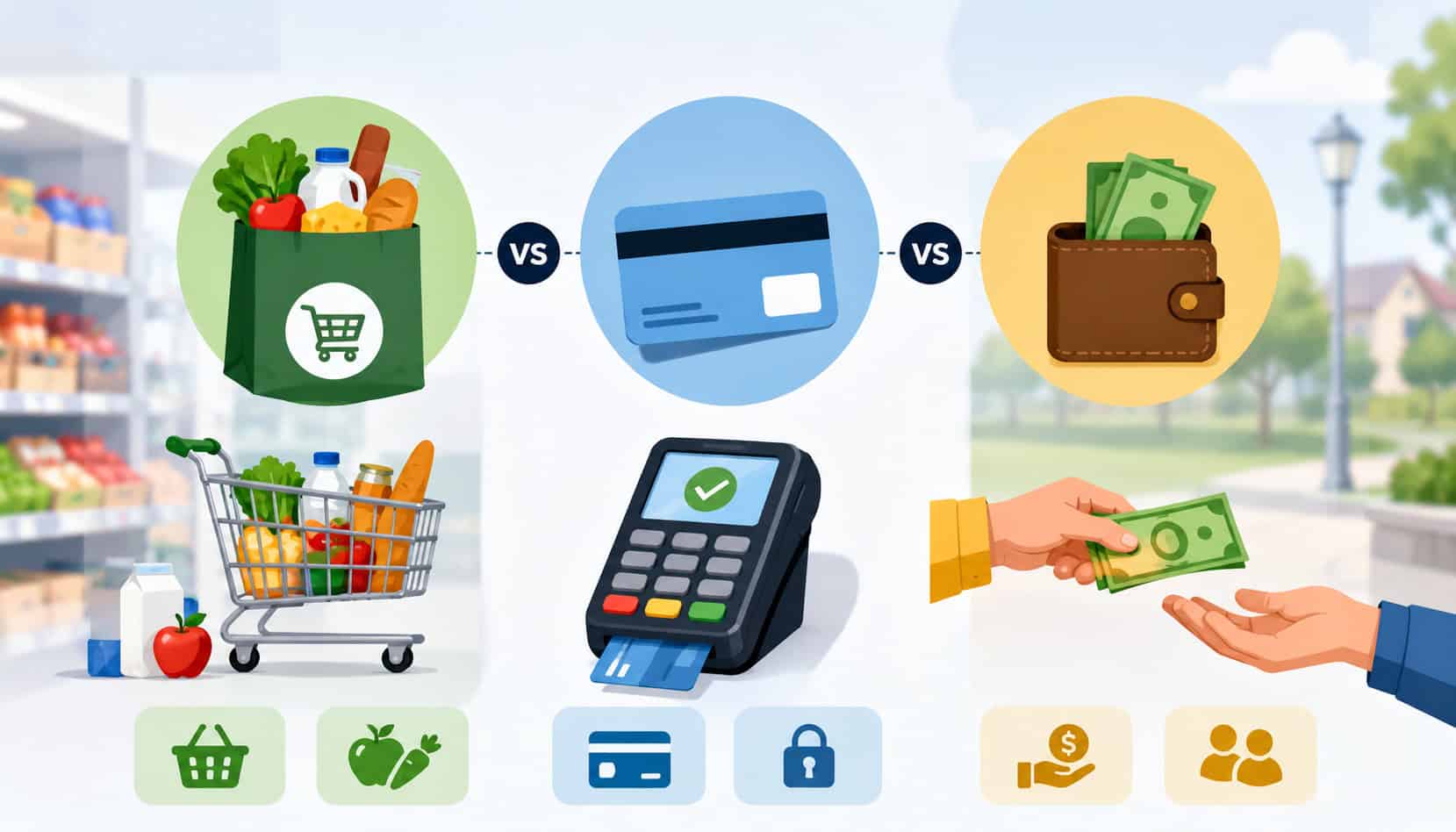
SNAP, EBT, and cash benefits are often used in the same conversation, but they do not mean the same thing. This confusion matters because each term affects what a person can buy, how a payment is processed, and what merchants must do at checkout.
The simplest way to understand the difference between SNAP, EBT, and Cash Benefits is this: SNAP is a food assistance benefit, EBT is the electronic card system used to access benefits, and cash benefits are a separate type of assistance that may offer broader spending flexibility.
For households, knowing the difference helps prevent declined purchases, balance confusion, and misunderstandings about eligible items. For retailers, it helps with proper item coding, compliant terminals, staff training, refunds, and secure payment handling.
Official guidance describes SNAP as food benefits that help eligible households supplement their grocery budget, while EBT is the electronic system that allows SNAP participants to pay for food using those benefits at authorized retailers.
What Is SNAP?
SNAP is a food assistance program that helps eligible households buy approved grocery items. It is designed to support access to food, not to function as general spending money. That is the first major difference between SNAP and EBT: SNAP is the benefit program, while EBT is the delivery method used to access that benefit.
SNAP food benefits are usually loaded into an electronic account. A recipient then uses an EBT payment card at an authorized retailer to pay for eligible food items. At checkout, the system deducts the approved purchase amount from the SNAP balance.
SNAP benefits are typically used for food items intended for home preparation and consumption. Common EBT eligible purchases may include:
- Fruits and vegetables
- Meat, poultry, and fish
- Dairy products
- Breads and cereals
- Snack foods
- Seeds and plants that produce food
SNAP benefits generally cannot be used for non-food items, alcohol, tobacco, household supplies, vitamins, medicines, or hot prepared foods sold for immediate consumption. Some exceptions may apply under specific local program rules, but the core rule is that SNAP food benefits are restricted to eligible food purchases.
For merchants, SNAP acceptance requires more than having a card reader. Retailers generally need authorization, EBT-compatible payment equipment, eligible item setup, and checkout procedures that separate SNAP-eligible and non-eligible products.
A merchant-focused guide on EBT payment processing requirements can be useful when reviewing terminal setup, receipts, refunds, and compliance workflows.
What Is EBT?
EBT stands for Electronic Benefits Transfer. It is the electronic card system used to deliver certain government benefit payments. EBT is not the benefit itself. Instead, it is the payment access method that allows approved benefits to be used through a card-based transaction.
This is where many people get confused. Saying “I have EBT” may mean the person has SNAP food benefits, cash benefits, or both loaded onto the same EBT card. The card is the access tool; the benefit account behind the card determines what can be purchased.
An EBT card works much like a debit card at checkout. The customer swipes, inserts, or taps the card depending on the terminal, enters a PIN, and selects the correct benefit type when prompted.
If the purchase includes SNAP-eligible items, the SNAP account may be charged. If cash benefits are available and the merchant supports that transaction type, the cash account may be used separately.
For merchants, this means checkout systems must recognize benefit categories correctly. A grocery store may accept SNAP EBT for eligible food but still require another payment method for non-food items. A well-configured POS system helps avoid accidental approvals, improper declines, or staff confusion.
For retailers evaluating EBT payment acceptance, this overview of how EBT payments work for merchants offers helpful context on transaction flow and checkout expectations.
What Are Cash Benefits?
Cash benefits are a separate type of assistance that may be delivered through an EBT card. Unlike SNAP food benefits, cash assistance benefits may allow broader use depending on the program rules. They may help with basic household needs beyond groceries, such as transportation, personal care items, clothing, or other approved expenses.
Cash benefits may be accessed in several ways. A recipient may use the EBT card at a participating retailer, withdraw cash from an approved ATM, or receive cash back at checkout where available. The exact options depend on program rules, location, card network access, and merchant setup.
The key difference in cash benefits vs SNAP benefits is flexibility. SNAP food benefits are restricted to eligible food items. Cash benefits may function more like funds available for broader household needs, though they still come with rules and restrictions.
| Term | What It Means | What It Can Be Used For | Key Difference |
| SNAP | A food assistance benefit program | Eligible food purchases | The benefit is restricted to approved food items |
| EBT | The electronic card system | Accessing SNAP, cash, or other supported benefits | It is the payment method, not the benefit itself |
| Cash Benefits | Flexible assistance funds | Broader approved household needs, purchases, or withdrawals | May be usable beyond food, depending on rules |
| SNAP EBT | SNAP benefits accessed through an EBT card | Eligible groceries at authorized retailers | Combines the food benefit with the card system |
SNAP vs EBT: What’s the Difference?
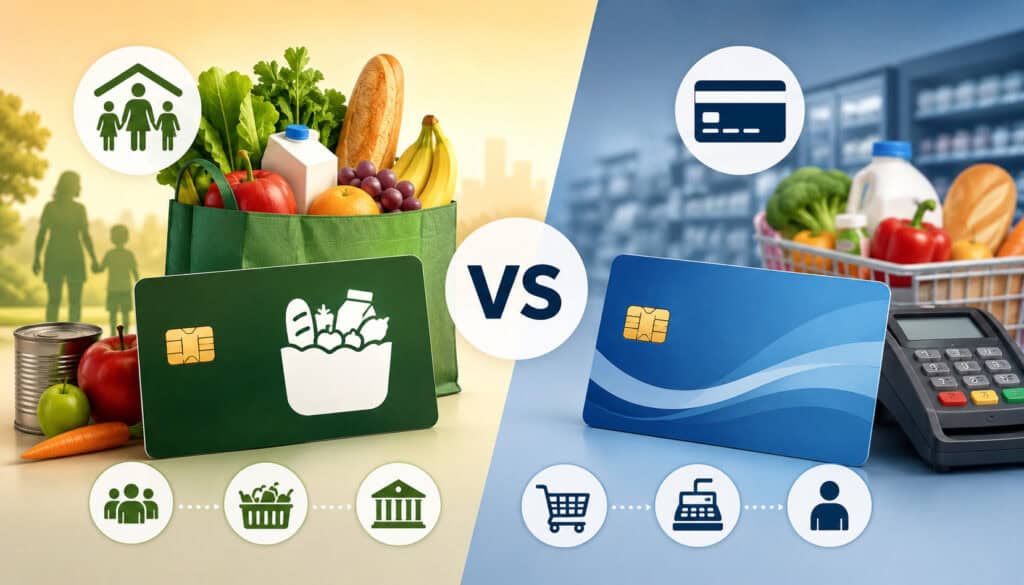
The phrase SNAP vs EBT can be misleading because SNAP and EBT are not competing programs. They work together, but they describe different parts of the benefit process.
SNAP is the food benefit program. EBT is the electronic delivery system. SNAP answers the question, “What kind of benefit is this?” EBT answers the question, “How does the person access and spend the benefit?”
This distinction matters at checkout. A customer may have an EBT card, but that does not automatically mean every item in the cart can be paid for with SNAP benefits. The system must identify eligible products, route the transaction correctly, and deduct funds from the proper account.
It also matters for merchants. A retailer cannot assume that accepting regular debit cards means it can automatically accept SNAP EBT. SNAP EBT requires proper authorization, compatible equipment, and program-compliant processing.
SNAP Is the Benefit Program
SNAP provides food assistance for eligible households. Its purpose is to help households buy groceries, so the benefit is limited to eligible food purchases. This is why SNAP benefits cannot usually be used for household goods, paper products, hot prepared meals, alcohol, tobacco, or general merchandise.
SNAP food benefits are issued into an account that can be accessed with an EBT card. When a customer uses SNAP at checkout, the transaction is approved only for eligible items. If the basket contains non-eligible products, the customer needs another payment method for those items.
This is the heart of the difference between SNAP and EBT. SNAP defines the benefit rules. EBT provides the transaction access.
EBT Is the Payment Delivery System
EBT is the system that lets customers use approved benefits electronically. It replaced paper-based benefit delivery with card-based transactions, PIN security, balance tracking, and electronic settlement.
At checkout, the EBT payment card communicates with the retailer’s POS system and benefit account processor. The system verifies the card, PIN, available balance, benefit type, and item eligibility when SNAP benefits are involved.
For merchants, EBT requires more than a card terminal. The POS system must support eligible item separation, balance inquiries, voids, refunds, and compliant receipts. Businesses working with payment providers may also need to understand the role of a third-party processor for EBT when routing benefit transactions securely.
Cash Benefits vs SNAP Benefits
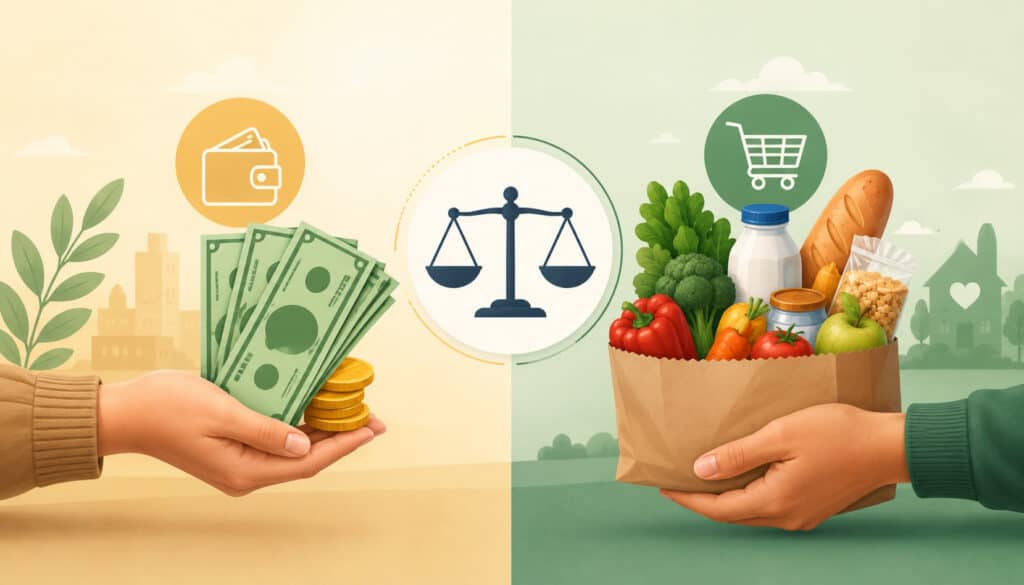
The comparison of cash benefits vs SNAP benefits comes down to allowed use, flexibility, access, and restrictions. SNAP benefits are food-only benefits. Cash benefits may be used more broadly, depending on the program rules attached to the funds.
SNAP benefits usually cannot be withdrawn as cash. They are designed to pay for eligible food purchases at authorized retailers. Cash benefits, by contrast, may allow ATM withdrawals, cash back, or purchases at merchants that support EBT cash transactions.
This difference affects customer experience. A shopper may have enough total value on an EBT card but still see a transaction declined if the wrong account is selected or if the item is not eligible under SNAP rules. For example, a customer may be able to buy bread with SNAP food benefits but need cash benefits, debit, credit, or cash for paper towels.
It also affects merchant acceptance. A store may be authorized for SNAP EBT food purchases but may not support cash benefit transactions in the same way. Merchants need to know what their terminals are configured to accept and train staff accordingly.
Food-Only Restrictions for SNAP
SNAP food benefits are restricted because they are intended for approved grocery purchases. The benefit is not general spending money, and the checkout system must enforce that distinction.
Common non-eligible items include:
- Hot prepared foods sold for immediate consumption
- Alcoholic beverages
- Tobacco products
- Cleaning supplies
- Paper goods
- Pet food
- Vitamins and medicines
- Personal care products
These restrictions are a common reason for declined or partially approved purchases. If a cart includes both eligible and ineligible items, the eligible food portion may be paid with SNAP, while the rest must be paid with another tender.
More Flexible Use of Cash Benefits
Cash benefits may offer more flexibility than SNAP food benefits. Depending on program rules, they may be used for broader household needs, including food, transportation, clothing, personal care products, and other everyday expenses.
However, flexibility does not mean there are no rules. Recipients still need to follow the terms of the benefit program. Some locations or transaction categories may be restricted. ATM fees, withdrawal limits, and merchant acceptance rules may also apply.
Customers should check their cash balance separately from their SNAP balance. Merchants should avoid giving advice beyond their role at checkout and should direct customers to their benefit agency for account-specific questions.
How EBT Cards Work at Checkout
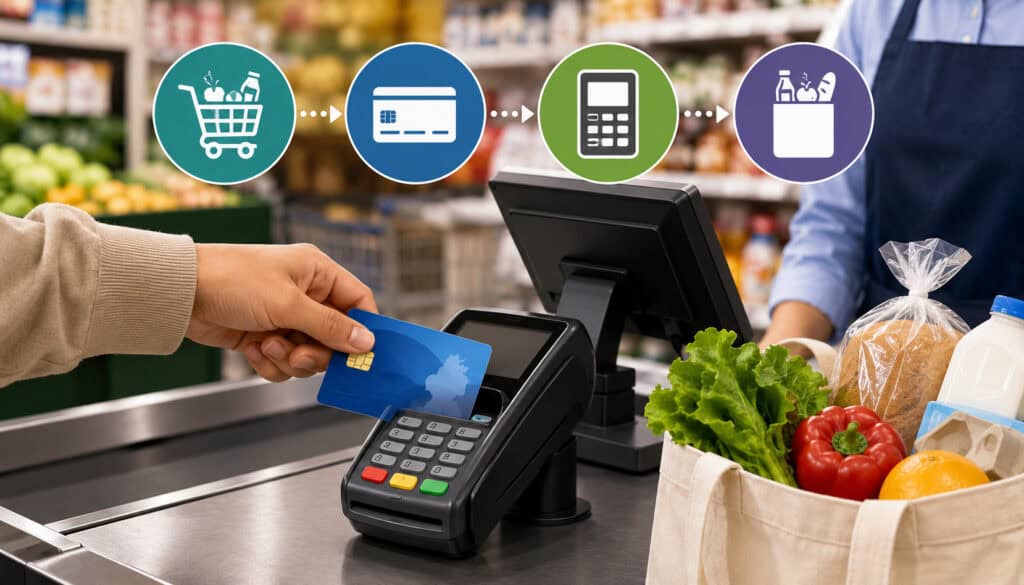
An EBT card transaction may look simple to the customer, but several steps happen behind the scenes. The customer presents the EBT card, enters a PIN, selects the benefit type if prompted, and the POS system processes the transaction based on item eligibility and available balance.
For SNAP purchases, the system identifies eligible food items and applies the SNAP balance only to those items. If the cart contains non-eligible items, the customer may complete the purchase with split payment. This is common in grocery and convenience store settings.
A typical checkout flow may include:
- Scanning all items
- Separating eligible and non-eligible items through POS coding
- Selecting EBT as the payment type
- Entering the PIN
- Applying SNAP benefits to eligible items
- Using another payment method for remaining items
- Printing a receipt with transaction details and remaining balance
Declined transactions can happen for several reasons. The card may have insufficient funds, the PIN may be entered incorrectly, the item may not be eligible, the merchant may not support that benefit type, or the terminal may not be configured properly.
What Merchants Should Know About SNAP, EBT, and Cash Benefits
Merchants need to understand the SNAP EBT cash benefits differences because customer experience and compliance both depend on accurate transaction handling. Accepting EBT is not the same as accepting a standard debit card. Benefit payments have program rules, item restrictions, reporting expectations, and refund requirements.
A merchant that accepts SNAP EBT must ensure eligible items are coded correctly. The POS system should distinguish between approved food items and non-eligible merchandise. Staff should know how to explain split payments without embarrassing customers or making assumptions about their benefits.
Retailers also need EBT-compatible terminals or POS systems. These systems should support PIN entry, balance inquiry, purchase transactions, refunds, voids, and receipt requirements. Security also matters because EBT payment processing involves sensitive card and transaction data.
Important merchant responsibilities include:
- Obtaining proper authorization before accepting SNAP EBT
- Using compatible EBT payment processing equipment
- Training staff on eligible and ineligible items
- Supporting split-tender transactions
- Handling refunds correctly
- Protecting customer card data
- Reviewing receipts and reports
- Avoiding prohibited manual workarounds
Retailers comparing systems can review products and services for EBT payment acceptance to better understand POS systems, merchant accounts, and secure payment options.
Common Misunderstandings About SNAP, EBT, and Cash Benefits
One common misunderstanding is that SNAP and EBT are the same. They are closely connected, but they are not interchangeable. SNAP is the food benefit. EBT is the payment card system.
Another misunderstanding is that every EBT card contains food benefits only. Some cards may carry SNAP benefits, cash benefits, or both. That is why a customer may have separate balances and different rules for each account.
A third misunderstanding involves eligible purchases. Customers may assume that anything sold in a grocery store is SNAP-eligible. That is not correct. Food items may qualify, while household supplies, hot prepared foods, and personal care products generally do not.
Merchants may also assume they can accept EBT automatically because they already accept debit cards. SNAP EBT acceptance usually requires approval and compliant processing. Without the right setup, an EBT card may not work at checkout even if the store has standard card terminals.
FAQs
What is the difference between SNAP and EBT?
SNAP is a food assistance benefit program, while EBT is the electronic card system used to access SNAP and sometimes other benefits. SNAP defines what the benefit can buy, and EBT provides the payment method.
Is EBT the same as SNAP?
No. EBT is not the same as SNAP. SNAP is the benefit program, and EBT is the card-based system used to spend the benefit at authorized retailers.
What are cash benefits?
Cash benefits are assistance funds that may be accessed through an EBT card and used more flexibly than SNAP benefits, depending on program rules. They may support broader household needs and may allow ATM withdrawals or cash-back options.
Can SNAP benefits be withdrawn as cash?
Usually, no. SNAP food benefits are intended for eligible food purchases and are not designed for cash withdrawal. Cash benefits are the account type that may allow withdrawals where permitted.
Can cash benefits be used for food?
Yes. Cash benefits may often be used for food, depending on program rules and merchant acceptance. Unlike SNAP, cash benefits may also be usable for some non-food needs.
Can one EBT card hold both SNAP and cash benefits?
Yes. One EBT card may hold both SNAP and cash benefit balances. The balances are separate, and each follows its own rules.
What can merchants accept with EBT?
Merchants may accept SNAP EBT for eligible food purchases if they are properly authorized and equipped. Some merchants may also support EBT cash transactions, depending on their setup and processing capabilities.
Why are some EBT purchases declined?
EBT purchases may be declined because of insufficient balance, wrong PIN, ineligible items, unsupported benefit type, terminal issues, or merchant setup problems. A split payment may be needed when only part of the cart is SNAP-eligible.
Conclusion
The Difference Between SNAP, EBT, and Cash Benefits is easier to understand when each term is separated by function. SNAP is a food benefit program. EBT is the electronic card and payment system used to access benefits. Cash benefits are a separate form of assistance that may allow broader use depending on program rules.
For recipients, understanding these differences helps avoid declined purchases and confusion at checkout. For merchants, it supports better compliance, smoother transactions, accurate item setup, secure processing, and better customer service.
SNAP, EBT, and cash benefits often work together, but they are not the same. Knowing how each one works makes benefit payments clearer, safer, and easier for everyone involved.