By Julia Koroleva January 25, 2026
Accepting benefits at checkout can expand access for shoppers and open a steady revenue channel for your store—but only if you follow EBT payment processing requirements for merchants from day one. “EBT” (Electronic Benefits Transfer) is the card-based way benefits are issued and spent through approved programs.
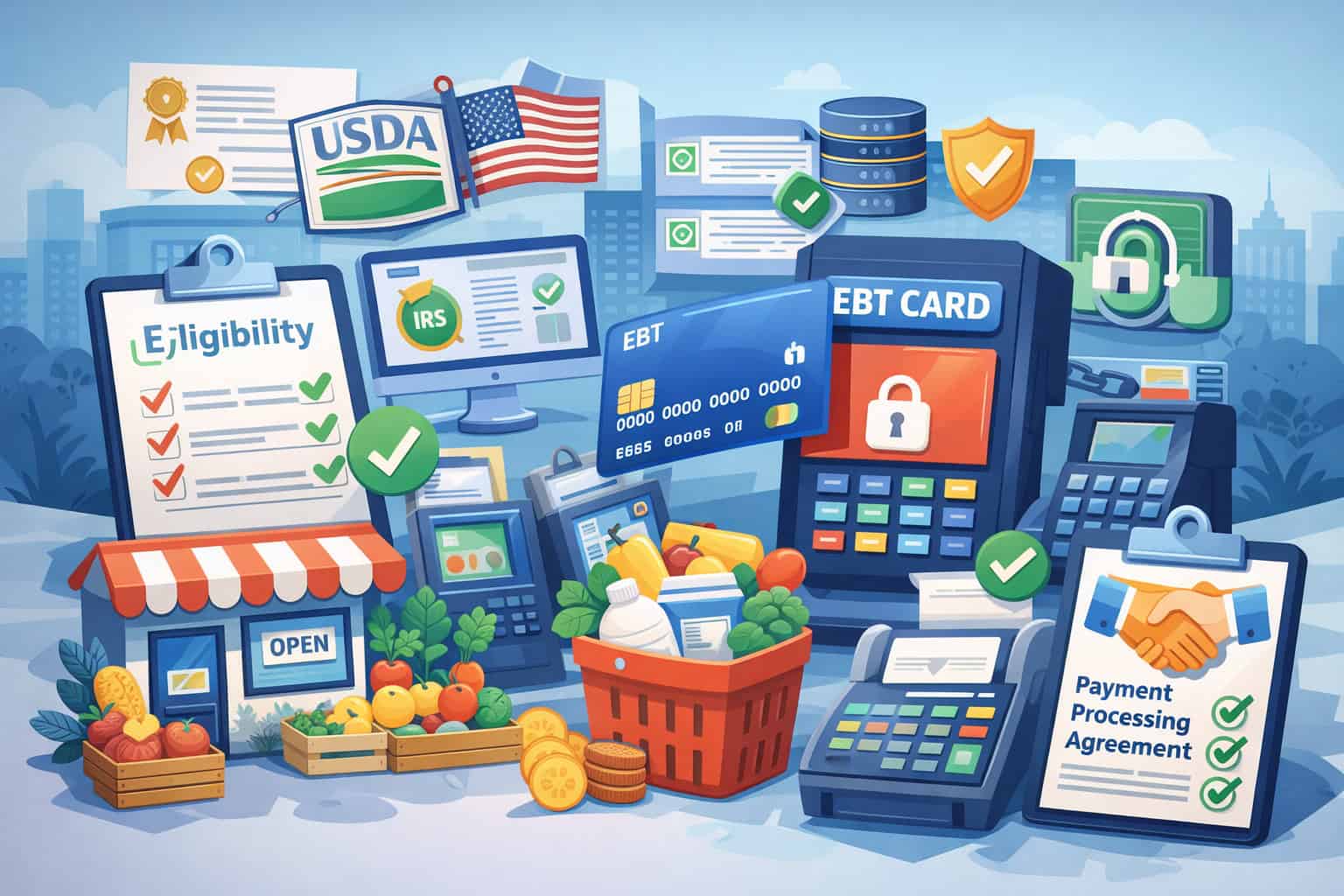
For merchants, the big picture is simple: you must be properly authorized, use compliant EBT equipment and processing services, follow item eligibility rules, and maintain secure, verifiable checkout and refund practices.
What makes EBT payment processing requirements for merchants feel complicated is that EBT isn’t “one thing.” In most locations, EBT commonly includes SNAP EBT (food benefits), and in many places it also includes eWIC (benefits for approved nutrition items).
Each program has its own approval pathway, its own equipment certification expectations, and its own rules for receipts, refunds, and audit trails. Add online ordering and delivery to the mix and the compliance bar rises again, especially around secure PIN entry and fraud controls for online EBT.
This guide walks through EBT payment processing requirements in a merchant-friendly way: what you must do to get approved, what your POS must do, what receipts must show, how to handle returns, what to train your staff on, and what’s changing next—so you can stay compliant and keep transactions flowing smoothly.
Understanding EBT Programs Merchants Can Accept
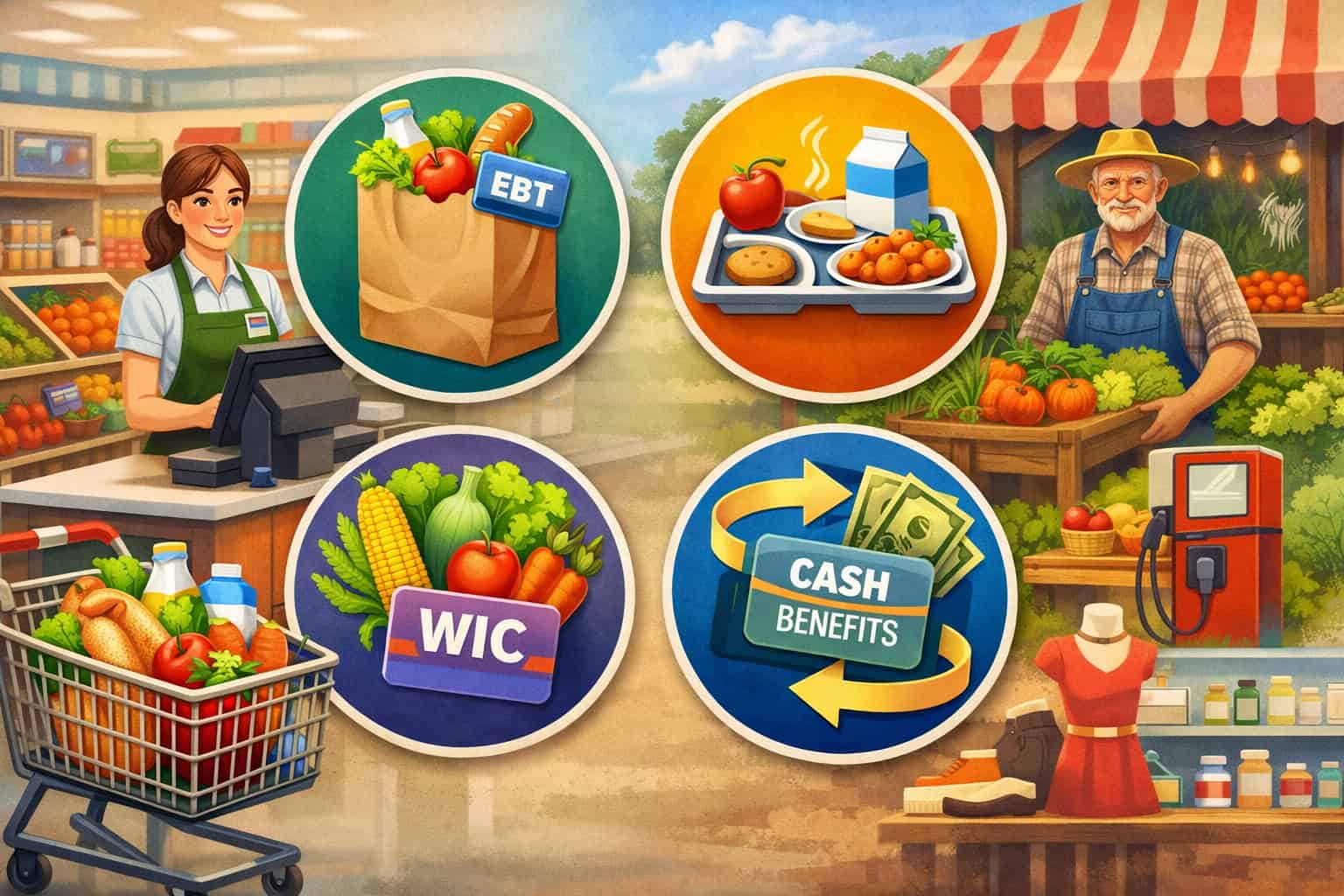
When people say “EBT,” they usually mean “the EBT card at checkout,” but merchants need to think in programs—because EBT payment processing requirements for merchants depend on which benefit types you accept and how you accept them (in-store vs online).
For food-benefit acceptance, SNAP is the most common. SNAP acceptance requires retailer authorization and compliant EBT transaction capability at your point of sale.
You’re expected to be able to run core functions such as purchase, balance inquiry, voiding the latest transaction, and refunds—because these are standard transaction needs in day-to-day operations. USDA retailer guidance also emphasizes that your POS must be correctly programmed and able to handle required transaction functions.
Separately, many merchants also pursue eWIC acceptance. eWIC often adds a second layer of requirements: state-level vendor authorization, program training obligations, and (in many cases) state-certified POS/eWIC software configurations.
For example, state WIC programs commonly require vendor/staff training on eWIC procedures and ongoing compliance to remain authorized.
From a merchant operations standpoint, the most important reality is that EBT payment processing requirements for merchants are not “optional best practices.” They are enforceable rules tied to your authorization status.
If your store is found to be out of compliance—whether due to receipt mistakes, improper refunds, or prohibited item handling—you can face chargebacks, repayment demands, or authorization actions.
SNAP EBT Retailer Authorization Requirements
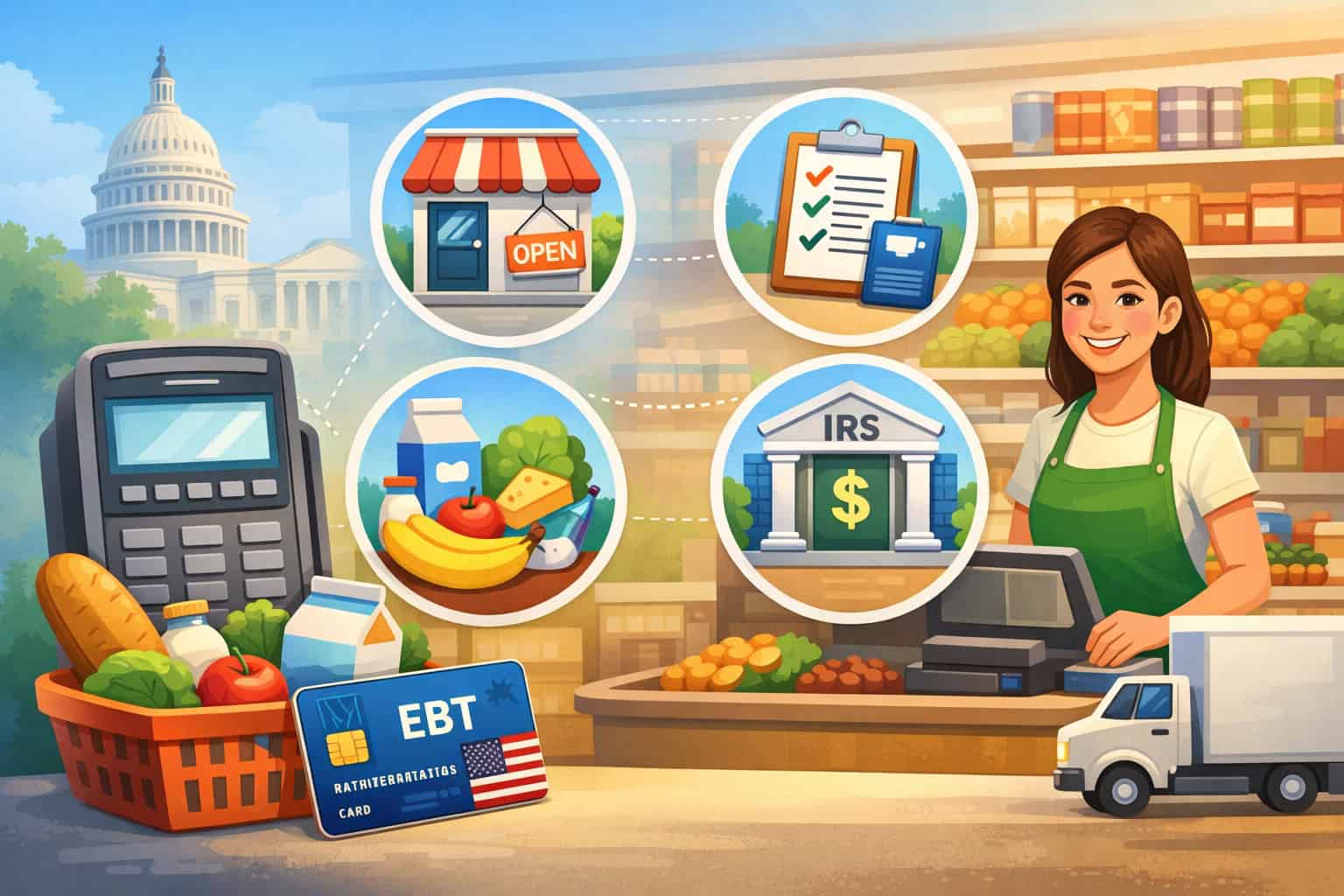
To accept SNAP EBT, you must be approved as an authorized retailer through the program administrator. Authorization is not just paperwork; it’s the start of your compliance obligations under EBT payment processing requirements for merchants.
A key approval driver is whether your business meets eligibility criteria for the type of store you operate. Many stores qualify based on inventory depth and variety in staple food categories, while others qualify based on sales mix.
While third-party summaries often describe staple-item minimums and variety thresholds, the practical point is: you should be prepared to document the way your store meets retailer criteria and keep your merchandising aligned to that basis over time (not just at application time). (If you later drift away from the criteria you used to qualify, your risk increases.)
After authorization, you generally need to arrange EBT processing services and EBT-capable equipment. USDA guidance explains that most authorized retailers must pay for their EBT equipment and services, with limited exceptions where free/state-supplied equipment may apply.
Also note that EBT processing isn’t something you can “wing” with a standard card terminal setup. SNAP EBT requires integration to the EBT network used for benefit approvals and settlement—typically through a processor path (often called a third-party processor, depending on the context and channel).
Your operations should be ready for periodic compliance reminders, updates, or training expectations tied to receipts, refunds, and transaction handling.
If your goal is to stay approved long-term, treat authorization as the start line: build your POS flow, receipts, staff training, and refund controls around EBT payment processing requirements immediately, not “once we get a few transactions.”
eWIC Vendor Authorization Requirements
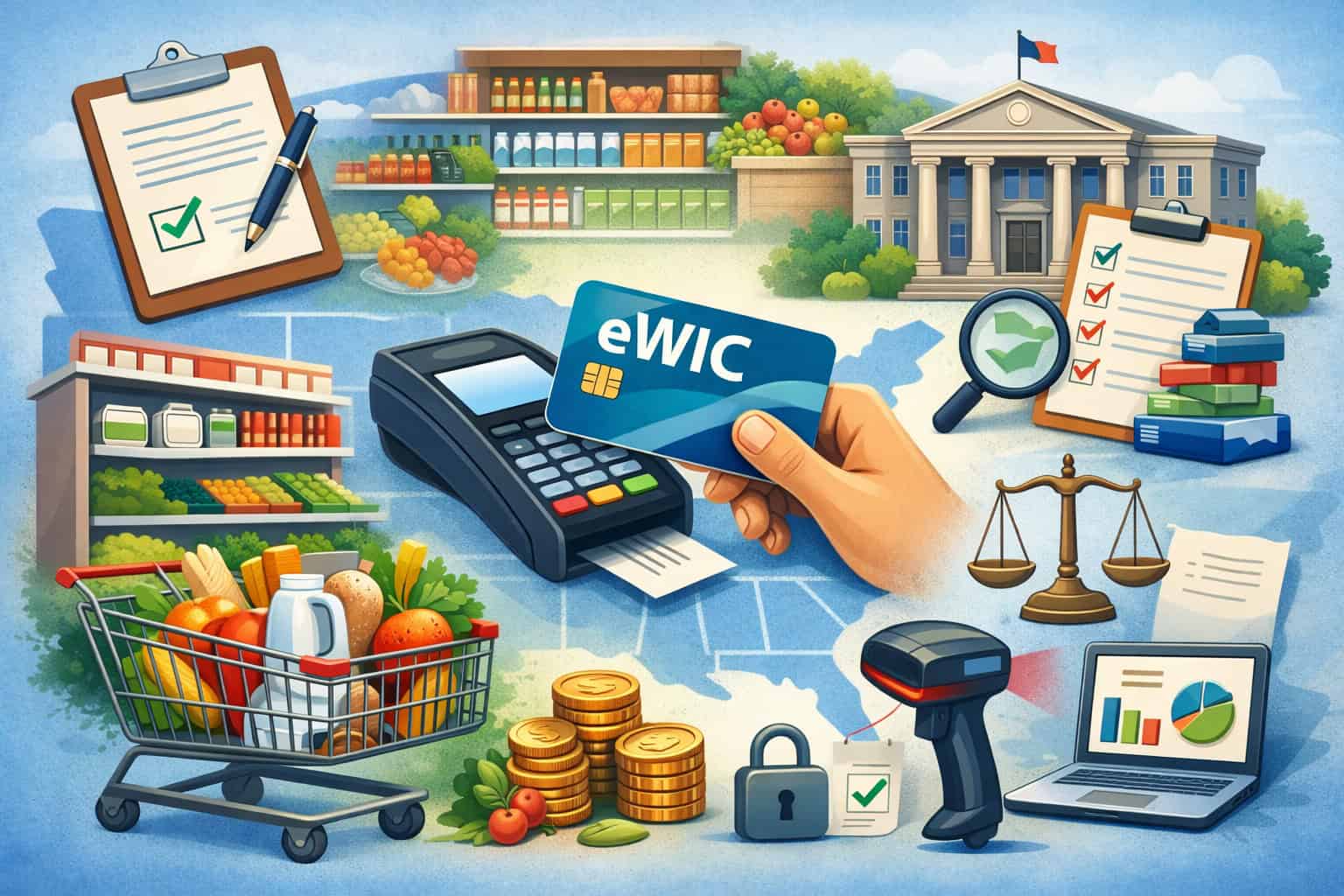
If you plan to accept WIC benefits via eWIC, you’ll usually need to complete a separate vendor authorization through the applicable program authority for your location. This is one of the most commonly missed EBT payment processing requirements for merchants: SNAP approval does not automatically mean eWIC approval.
eWIC requirements often include formal training, ongoing compliance checks, and specific POS or lane capabilities. Many state WIC vendor management rules require that an owner/manager (or authorized representative) complete approved training and that cashiers and staff are fully trained in eWIC acceptance and processing.
This matters operationally because eWIC transactions can fail for reasons that look like “regular POS issues” but are actually “program rule issues” (for example, item eligibility mismatches, benefit balance constraints, or incorrect scanning/PLU workflows).
Equipment is also a bigger deal in eWIC than many merchants expect. Some WIC programs require EBT-capable POS systems that are specifically certified to transact WIC cards in that program environment.
As one state example, California’s WIC program states that WIC authorized vendors must have an EBT-capable POS system that has been certified to transact the WIC card in that state.
EBT Equipment, POS Capabilities, and Processor Requirements
Your equipment and processing setup is where compliance becomes real. EBT payment processing requirements for merchants don’t stop at having “a terminal.” Your POS must be able to do the specific EBT flows that the programs require and produce compliant receipts and audit trails.
Third-Party Processors and Paying for EBT Services
Most retailers obtain EBT transaction routing and related services through a third-party processing option. USDA materials and public resources emphasize that most SNAP-authorized retailers are responsible for arranging (and paying for) EBT equipment and services, unless a limited exception applies.
Guides aimed at small and rural retailers also note that retailers work with third-party processors to complete EBT transactions and that selecting a processor is a merchant’s responsibility.
From a practical standpoint, your processor and/or POS provider should support:
- SNAP purchase authorization and settlement
- Balance inquiry
- Voids (especially “void last transaction” scenarios)
- Refund workflows that correctly route funds back per program rules
- Key-entered flows when permitted/needed (with proper controls)
- Accurate receipt printing and masking rules (more on receipts below)
If you’re selecting a processing partner, treat “EBT-ready” as a starting claim, not proof. Ask specifically how they support the required transaction functions referenced in retailer guidance and whether their setup has known limitations for your store model (single-lane, mobile checkout, unattended kiosks, online ordering, etc.).
Receipt Requirements and Proper Card Data Handling
Receipt compliance is one of the most enforceable EBT payment processing requirements for merchants because it’s easy to audit and easy to get wrong at scale.
USDA retailer reminders emphasize that SNAP retailers are responsible for ensuring POS terminals are programmed correctly and that the POS can process SNAP EBT transactions including refunds, key-entered transactions, balance inquiries, and voiding the latest transaction.
The same receipt-focused guidance highlights receipt requirements and card number handling expectations (for example, how the PAN appears).
In practice, you should validate:
- Your receipt template shows what the program expects (tender type, transaction result, remaining balance if applicable)
- Sensitive card data is not exposed beyond allowed formats
- Merchant copy and customer copy rules are consistent across lanes/devices
- Reprint logic does not accidentally print restricted data
A smart operational move: run test transactions after installation and after every POS update, then spot-check receipts weekly until you’re confident.
Transaction Alternatives and Manual/Offline Risks
Sometimes networks go down or a lane loses connectivity. Some regulations describe alternative methods for obtaining authorization (for example, contacting the host/hotline and logging a transaction) and warn that if authorization can’t be obtained at the time of purchase, the retailer may assume risk that sufficient benefits are available.
That means your “offline plan” must be conservative:
- Train staff on what to do during outages
- Avoid “creative” workarounds that bypass authorization
- Document outages and follow approved procedures only
This is a hidden area where EBT payment processing requirements for merchants intersect with loss prevention: you don’t want a well-meaning cashier turning an outage into unrecoverable loss or a compliance incident.
Item Eligibility Rules and Split-Tender Checkout Flow
Your checkout flow must enforce what can and cannot be purchased with benefits. This is central to EBT payment processing requirements for merchants and also central to customer experience—because unclear signage or confusing POS prompts can cause abandoned baskets.
For SNAP food benefits, eligible items are generally food for home consumption, while hot prepared foods, alcohol, and many non-food items are typically not eligible. Your POS should be configured to separate eligible and ineligible items so that:
- Eligible items can be paid with EBT food benefits
- Ineligible items are routed to another tender type (cash/debit/credit)
- The customer can complete a “split tender” purchase without re-ringing everything
Operationally, the best practice is to map tax and item categories correctly:
- Ensure eligible items are coded properly in the POS
- Ensure non-eligible categories are blocked from EBT tender
- Ensure weighted items (produce/meat) are handled cleanly
For eWIC, eligibility is often more specific (approved brands, package sizes, and UPC-level constraints in many environments). That’s why staff training and scanning discipline matter—cashiers need to understand that “substitutions” aren’t always allowed even if the item seems similar.
If you do online ordering, eligibility logic becomes even more important because customers need clear labeling of eligible items and a reliable split-tender workflow. Some retailers expanding EBT online have emphasized clearer marking/badges for eligible items as part of improving customer experience.
Returns, Refunds, Voids, and Dispute-Proof Recordkeeping
Refund handling is where many merchants unintentionally violate EBT payment processing requirements for merchants—especially if staff treat EBT like a standard card refund without understanding constraints.
USDA retailer reminders emphasize that your POS must be able to perform refunds and void the latest transaction as part of normal SNAP EBT processing capability. That implies you must have:
- A consistent refund policy that aligns with program expectations
- POS workflows that route refunds properly (back to benefit accounts when required)
- Clear manager controls to prevent refund abuse
For online purchasing, documented retailer requirements and guidance highlight the importance of matching refunds back to the original purchase and handling complex pricing scenarios like variable-weight items. That’s not just “nice to have”—it’s part of preventing customer harm and fraud risk.
To reduce risk:
- Require manager approval for EBT refunds over a threshold
- Disable “cash back” style workflows on EBT tenders
- Keep logs: transaction ID, date/time, cashier, items, refund reason
- Train staff on “void vs refund” and when each is allowed
If your POS or processor can’t reliably do compliant refunds, that’s a red flag. In the world of EBT payment processing requirements, refund failures can quickly turn into complaints, investigations, and operational chaos.
Staff Training, Signage, and Day-to-Day Compliance Controls
Even perfect equipment fails if your staff is guessing at the register. The most effective compliance strategy for EBT payment processing requirements for merchants is structured training plus simple controls.
Many WIC vendor rules explicitly require vendor/staff training in eWIC acceptance and processing. SNAP guidance frequently emphasizes correct POS programming and proper transaction capabilities—meaning your people must know how the programmed system is supposed to work.
Build a training plan that includes:
- How EBT works (PIN entry, approvals, declines)
- How to recognize eligible vs ineligible items
- How to do split tender quickly
- How to process a refund/void correctly
- What to do during outages (and what not to do)
- How to handle customer questions respectfully (privacy matters)
Add simple compliance controls:
- Post clear “EBT accepted” signage only for the benefit types you actually accept
- Provide lane prompts or quick-reference cards (refund steps, outage steps)
- Do monthly receipt audits (verify masking and required info)
- Limit manager override powers and log overrides
This isn’t overkill. It’s how you keep EBT payment processing requirements for merchants from turning into cashier-by-cashier improvisation.
Online EBT and Omnichannel Requirements
Online acceptance is a fast-growing area—and also where EBT payment processing requirements for merchants are the strictest.
Online Purchasing Criteria and Platform Requirements
Retailers must meet specific criteria to offer online purchasing with benefits, and they must align their e-commerce experience to program requirements.
USDA’s retailer requirements page notes that retailers must update websites to meet online purchasing requirements and that if a retailer uses an eCommerce platform new to online EBT payment processing, additional documentation (such as a Business Requirements Document) may be required.
Industry guidance documents for retailers emphasize due diligence when selecting providers that support online EBT and outline issues to evaluate when choosing an eCommerce provider for online SNAP EBT transactions.
Secure Online PIN Entry and Fraud Controls
A defining requirement for online EBT is secure PIN entry. Third-party processors (TPPs) commonly provide secure PIN-entry solutions to enable online acceptance. Guidance describing the online program explains that TPPs route transactions for approval and provide the secure PIN-entry solution needed for online EBT.
Online also brings account controls and anti-fraud expectations. Retailer criteria guidance has highlighted rules intended to reduce fraud, such as limiting how EBT card details are provisioned/stored in customer accounts in certain implementations.
For merchants, the takeaway is: online EBT isn’t just “turn on a payment method.” You need:
- Eligible item labeling
- Accurate cart splitting
- Delivery/pickup fee handling (benefits generally apply to eligible items, not fees)
- Refund matching
- Secure PIN entry via approved/compatible processing paths
- Strong fraud controls and customer support playbooks
If you want to rank and convert online shoppers, design the experience around compliance first—because failed EBT checkouts destroy trust quickly.
Costs, Fees, and How to Choose an EBT Processing Setup
Merchants often ask, “What does EBT cost?” The honest answer: costs vary by your POS environment, lane count, provider model, and whether you need online capability.
But EBT payment processing requirements for merchants make one thing clear: most retailers are expected to arrange and pay for the equipment and services needed to participate, with limited exceptions.
When comparing options, evaluate:
- Compatibility: Does it support SNAP EBT now, and eWIC if you need it?
- Required functions: Refunds, voids, balance inquiries, key-entry controls, reporting (explicitly referenced in retailer guidance)
- Support model: Who fixes a down lane on a weekend?
- Contract clarity: Equipment lease terms, support SLAs, upgrade fees
- Omnichannel roadmap: If you plan online ordering, confirm secure PIN entry support and online requirements alignment
- Compliance assistance: Receipt template validation, audit logs, training materials
A useful strategy is to start with a compliance checklist and make providers “prove it” with screenshots, demo flows, and written confirmation of capabilities. In the EBT world, vague promises become expensive surprises.
Common Compliance Violations and Enforcement Risks
Most EBT compliance issues aren’t caused by bad intentions—they’re caused by weak systems, rushed training, or “we assumed it worked like a normal card.” But enforcement doesn’t care about assumptions.
EBT payment processing requirements for merchants are measurable, auditable, and enforced through transaction review, complaints, and investigations.
High-risk areas include:
- Selling ineligible items as eligible due to wrong POS coding
- Poor refund controls (especially refunds that don’t follow the original tender path)
- Receipt misconfiguration or improper card data display
- “Manual” or “offline” workarounds during outages that skip proper authorization steps
- Online flows that don’t meet secure PIN entry expectations or refund-matching expectations
To reduce risk, you want layered protection:
- Correct POS configuration
- Staff training + manager controls
- Routine audits (receipts, refunds, overrides)
- A written incident response process for outages and customer disputes
This is how you keep EBT payment processing requirements for merchants from becoming a constant fear and turn them into a stable, repeatable operating process.
Future Predictions: Where EBT Acceptance Is Headed Next
The next wave of change is less about “whether EBT exists” and more about how it’s used across channels. Based on ongoing online purchasing expansion and the growing ecosystem of online EBT platform and third-party processor guidance, merchants should plan for more digital-first expectations—especially around secure PIN entry, fraud prevention, and better customer UX for eligibility and split tender.
Here are realistic future-facing predictions merchants can prepare for while staying inside EBT payment processing requirements:
More Online EBT Coverage and Better E-Commerce Standards
Online EBT has moved beyond “pilot novelty” into mainstream grocery enablement, with retailers continuing to expand delivery and pickup acceptance. Expect stronger standardization of:
- Eligible-item badging and search filters
- More robust refund matching and substitution logic
- Required error messaging and customer support expectations
Increased Compliance Automation and Auditable Data
As online grows, audits and monitoring can become more data-driven. Merchants should expect:
- Tighter controls on stored card provisioning and account linking behaviors in online environments
- More emphasis on detailed logs for refunds, voids, and adjustments
- Faster detection of anomalous purchasing or refund patterns
POS Modernization and “Unified Commerce” Expectations
While traditional countertop terminals will remain common, merchants will increasingly want:
- Unified reporting across in-store and online EBT
- Centralized configuration so receipt rules and refund rules remain consistent across channels
- Cleaner integrations with inventory/eligibility mapping so item coding doesn’t drift
The safest approach is to choose systems that already meet today’s EBT payment processing requirements for merchants and have a clear upgrade path for online EBT—so you’re not forced into a rushed migration later.
FAQs
Q.1: What are the minimum POS functions I need to stay compliant?
Answer: At a minimum, your POS must reliably complete core SNAP EBT flows that are repeatedly emphasized in retailer guidance: purchase processing, refunds, balance inquiries, and the ability to void the latest transaction.
From a real-world operations viewpoint, that also means your POS has to handle declines gracefully, print compliant receipts consistently, and maintain transaction identifiers you can reference for customer support and dispute handling.
Merchants get into trouble when they can “run a sale” but can’t properly reverse it, can’t verify balance, or can’t void an accidental duplicate transaction. Those gaps create customer harm and can trigger compliance attention.
The safer standard is to test every function during installation and after every POS update, then train staff on the exact button paths. If your provider says “refunds aren’t supported on EBT,” treat that as an immediate escalation item, because refunds are a referenced requirement for SNAP EBT transaction handling at the POS.
Q.2: Do I have to pay for EBT equipment and processing services?
Answer: In most cases, yes—most retailers are expected to pay for their EBT equipment and services, although some limited exemptions can apply in certain situations.
USDA materials for new retailers note that most retailers are required to pay for EBT equipment and services, whether obtained through a state processor or a third party, with some stores eligible for free state-supplied POS equipment.
Public program resources also provide lists and guidance to help SNAP-authorized retailers find third-party processor options.
From a budgeting standpoint, consider the full cost of ownership: equipment/terminal or POS upgrades, monthly service, support, and any online enablement costs if you want e-commerce.
If your business model depends on a single-lane setup, prioritize reliability and fast replacement options over the absolute lowest monthly price. The cost of a down lane (and angry customers) often exceeds the savings of a bargain plan.
Q.3: Can I accept EBT for online orders, pickup, or delivery?
Answer: Yes, but online acceptance adds extra requirements and is not automatically enabled by in-store authorization alone. Retailer requirements for online purchasing highlight that retailers must update websites to meet online purchasing requirements and that additional documentation may be required when using a platform new to online EBT processing.
Online EBT also typically depends on secure PIN entry, commonly delivered through third-party processor solutions that support online EBT flows.
Operationally, online EBT demands stronger eligibility labeling, split tender design, careful handling of fees, and robust refund matching.
Online retailer requirement documents also address scenarios like variable-weight pricing and refund matching to the original purchase—things that are easy to mishandle if your e-commerce stack wasn’t built for grocery logic.
If you’re planning delivery, pay special attention to the customer experience and support scripts, because delivery adds more edge cases (substitutions, out-of-stocks, partial fulfillment, and post-delivery adjustments).
Q.4: What receipt rules should I pay attention to?
Answer: Receipt rules matter because they’re easy to audit and easy to mess up when you change POS systems, add lanes, or update software. USDA retailer reminders focus on receipt requirements and stress that retailers are responsible for ensuring POS terminals are programmed correctly.
In practice, you should ensure your receipts consistently identify the tender type, show an accurate transaction record, and follow rules for how card data is displayed. You should also confirm your receipt logic stays consistent for reprints, refunds, and voids—because those are the moments when systems sometimes accidentally print extra data or omit required fields.
The best prevention strategy is a receipt test plan: run test transactions at install, then spot-check receipts after updates and monthly thereafter. If you have multiple store locations, standardize receipt templates and keep a centralized change control process so one store doesn’t drift into noncompliance.
Q.5: Is eWIC the same as SNAP EBT from a merchant perspective?
Answer: Not exactly. They both use EBT-style transactions, but eWIC often includes additional vendor authorization steps, staff training requirements, and state-specific equipment certification expectations.
For example, WIC vendor management rules can require store representatives and staff to complete approved eWIC training and ensure all cashiers are trained on eWIC requirements. Some programs also require POS equipment that is certified for WIC card transactions in that program environment.
From a checkout perspective, eWIC can also be more item-specific, so scanning accuracy and substitution rules matter more.
If you want to accept both, plan for dual authorization, dual configuration, and training that treats them as different tenders with different rule sets—because that’s the only reliable way to meet EBT payment processing requirements for merchants across both benefit types.
Conclusion
If you want a simple way to think about EBT payment processing requirements for merchants, think in four layers: authorization, equipment/processing, checkout controls, and audit-proof operations.
- Authorization: Get properly approved for SNAP EBT, and separately for eWIC if you plan to accept it.
- Equipment & processing: Use EBT-capable systems that support required transaction functions like refunds, balance inquiries, and voiding, and ensure your setup aligns with retailer guidance.
- Checkout controls: Correct item eligibility mapping, reliable split tender, and staff who know how to handle declines and outages.
- Operational discipline: Receipt compliance, refund controls, training, and periodic audits—especially if you expand to online EBT, where secure PIN entry and refund matching expectations are central.
Merchants who do this well don’t just “accept EBT.” They run a clean, reliable, customer-friendly checkout that protects the business and the shopper. And as online purchasing continues to expand and standards mature, the stores that build around compliance-first design will be the ones best positioned for the next phase of EBT growth.