Every time someone shops online, taps a card at a retail store, or subscribes to a streaming service, sensitive payment information travels through multiple systems before the transaction is complete. Customers often expect these payments to happen instantly, but behind every successful purchase is a complex process designed to keep financial information safe. With cybercrime continuing to evolve, protecting cardholder data has become one of the biggest responsibilities for businesses, banks, and payment service providers.
Consumers today use digital wallets, mobile banking apps, contactless cards, and online marketplaces more than ever before. While these technologies make shopping easier, they also create more opportunities for criminals to target payment information. Traditional methods of storing card details expose businesses and customers to unnecessary risks if security measures are not strong enough.
One of the most effective solutions developed to address this challenge is payment tokenization. Instead of storing or transmitting actual card numbers during transactions, tokenization replaces sensitive information with randomly generated values called tokens. These tokens have no meaningful value if intercepted, making them an effective defence against fraud and data theft. As businesses continue to prioritise customer trust and regulatory compliance, understanding how payment tokenization works has become increasingly important.
Understanding Payment Tokenization
In its essence, tokenization is a technology that replaces sensitive payment card data with the unique identifier called a token. Token acts as an alternative to the primary card number when it comes to storage and transmission of the data. In contrast to the initial data, the token cannot be reverse-engineered into the real account details.
Once the customer provides card data during the payment process, the system forwards it to the tokenization provider. The card number is kept in the secure environment called the token vault, whereas the merchant gets a token in response to each transaction. All further payments can be made using the token instead of revealing the real card data.
The absence of any financial data in the token makes this technology less appealing to cybercriminals. The data stored by merchants in their databases will not be useful for any fraudulent purposes.
Why Card Information Needs Better Protection
The payment card information still attracts the attention of criminals in cyberspace. The stolen credit card numbers may be sold at illegal websites, used for purchasing goods illegally, or used for identity theft purposes. The data breach of such an information source may result in huge loss and destruction of the company’s image.
Nowadays, there is a variety of ways to collect payment information. These include using websites, mobile apps, shops, subscription services, call centers and any other customer contact channels. All new payment methods increase the number of sources that require security. With the lack of proper controls, the attacker will have an opportunity to use software bugs, phishing, malware, and insiders to get the information.
Finally, customers expect companies to protect their money from being hacked. In case of payment breach, a company loses customers’ confidence, faces regulatory fines, and spends many resources to investigate the situation. So, nowadays, a good protection of card data is necessary both from a compliance standpoint and from a business perspective.
How Payment Tokenization Works
Despite the complexity of the underlying technologies used in tokenization, the process itself is quite simple. Once the customer makes the input of the payment information, it is delivered securely by the payment gateway to a tokenization system, which produces an arbitrary token that does not have any numerical connection to the original credit card number.
The token then replaces the payment information in all the systems of the merchant that use the payment information. Instead of submitting the original credit card number, the token is used every time another payment is needed. It can only be converted into the original information stored securely in the token vault by authorized payment processors.
Thus, merchants do not have to save any of the real credit card numbers in their internal systems. They significantly decrease the risk of having the financial information stolen by potential attackers.
The Difference Between Tokenization and Encryption
People often confuse tokenization with encryption because both technologies protect sensitive information. Although they serve similar goals, they work in different ways and provide different security benefits.
Encryption converts readable information into coded data using mathematical algorithms. Authorised parties can restore the original information by using the correct encryption key. If attackers obtain both the encrypted data and the key, they may eventually recover the original information.
Tokenization follows a different approach. Instead of transforming card information, it completely replaces it with a random token. The token itself contains no usable financial data and cannot be decrypted. The original card number remains stored separately in a highly secure environment. This distinction makes payment tokenization especially effective for reducing the exposure of sensitive payment information across business systems.
Why Tokenization Is Effective Against Data Breaches
Data breaches happen when criminals manage to get into the databases of companies that contain customer payment information. The databases store full card numbers, which means that once they get the information, they can act on it immediately. Tokenization dramatically changes that scenario.
Since merchants have tokens stored, but no card numbers, the data breaches become ineffective for criminals. They will only obtain useless data, which cannot be used as payment information even if they manage to breach the merchants’ systems.
The lack of important data also makes security incidents less harmful. Companies should have effective cybersecurity policies, but the additional security measure of tokenization ensures that the important card data does not exist everywhere inside the system.
Supporting Secure Online Shopping
Online shopping is becoming popular in every sector. Consumers make purchases of groceries, clothes, electronics, traveling, entertainment subscriptions, healthcare items, and many other goods using the internet on a daily basis. Online payment security becomes extremely significant with such rapid development.
The majority of online shopping companies use a method called payment tokenization that allows for safe storage of the payment data of consumers for further purchases. Consumers do not need to enter card data multiple times when making subsequent purchases as the system uses tokens rather than card numbers. This provides convenience for customers while ensuring the highest level of security.
Protecting Mobile and Contactless Payments
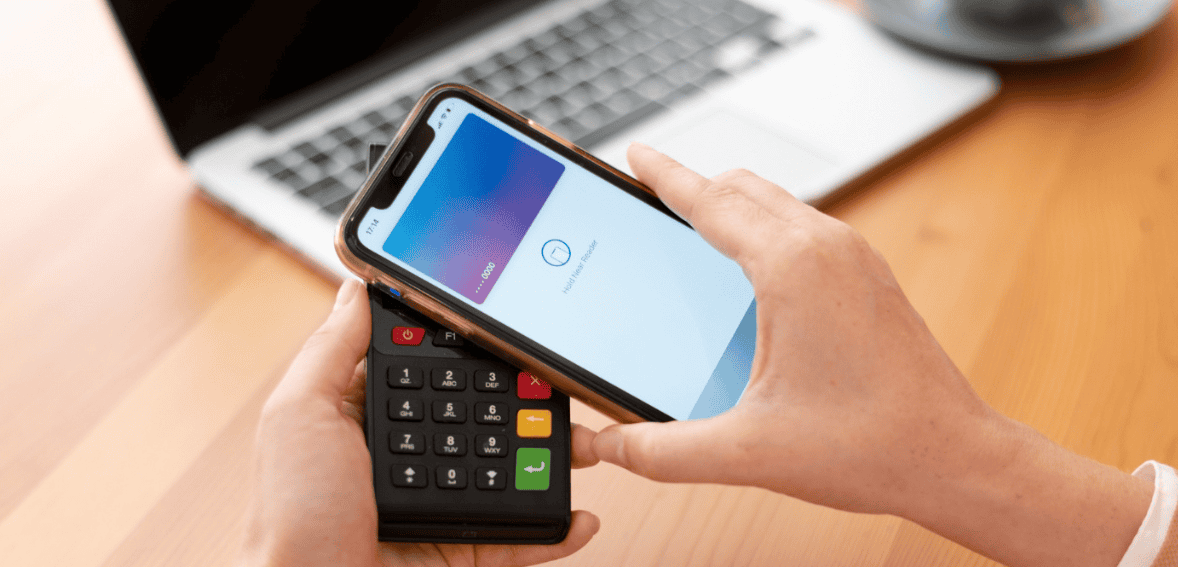
The popularity of smartphones and digital wallets has transformed the way people pay for goods and services. Mobile payment platforms often rely heavily on tokenization to protect customer information during contactless purchases.
When a customer adds a payment card to a digital wallet, the actual card number is typically replaced with a unique payment token. During purchases, the device transmits the token instead of the real card information. This means retailers never receive or store the customer’s actual payment credentials.
Even if communication between the mobile device and payment terminal were intercepted, attackers would not obtain usable card details. This makes tokenized payment systems particularly valuable in modern mobile payment environments.
Improving Customer Confidence
Customers are becoming more aware of the danger of cyber attacks. Customers have become quite wary of data breach news and tend to be careful when it comes to sharing their financial data. Companies who implement secure payments show that they are serious about their customer’s safety.
Tokenization is not well understood by all customers, but customers value companies who focus on safe payments. Knowledge that their card data is being processed securely makes customers more willing to complete their transactions.
Trust is an important part of customer loyalty. It is easier for shoppers to become loyal when they know their payment data is secure. Secure transactions are essential to customer relations.
Supporting PCI DSS Compliance
Organisations which handle credit card payments have to meet requirements of the Payment Card Industry Data Security Standard, better known as PCI DSS. Such standards define the set of rules that should be met in order to protect cardholder data through the entire payment process.
Tokenisation assists organisations in decreasing the volume of sensitive payment data stored in organisational systems. Due to the fact that there will be less systems storing actual card numbers, PCI compliance efforts can be made easier. Thus, some security tasks become simpler and more effective.
It is crucial to realize that tokenisation cannot solve all compliance issues. Organisations still need to take appropriate steps in order to provide their cybersecurity, staff training, and monitoring activities. Nevertheless, tokenisation will be useful in achieving compliance goals.
Tokenization for Recurring Payments
Subscription services have become common across entertainment, fitness, software, healthcare, education, and many other industries. Customers expect recurring payments to happen automatically without entering payment details each month.
Tokenization enables these recurring billing models while maintaining strong security. Instead of storing actual card numbers, subscription providers retain payment tokens that reference securely stored card information. Future payments use these tokens to process authorised transactions.
This approach allows businesses to manage ongoing billing without repeatedly exposing customer payment credentials. It also reduces operational risks associated with maintaining large databases of stored card information.
Reducing Fraud Opportunities
Payment fraud continues to evolve as criminals develop increasingly sophisticated attack methods. Tokenization does not prevent every type of fraud, but it significantly reduces opportunities for criminals to misuse stolen payment information.
If attackers steal tokenized information from a merchant database, the tokens generally cannot be reused outside their intended payment environment. Many tokens are designed for specific merchants, devices, or transaction types, limiting their usefulness even further.
By making stolen payment records far less valuable, payment tokenization changes the economics of payment fraud. Criminals prefer targets that provide immediate financial gain, and tokenized databases offer little incentive compared with systems storing actual card numbers.
Benefits for Businesses of Every Size
Large financial institutions were among the earliest adopters of tokenization, but the technology now benefits organisations of all sizes. Small businesses, online retailers, healthcare providers, hospitality companies, educational institutions, and service providers all process customer payments that require protection.
Modern payment platforms often include tokenization as part of their standard payment services, making advanced security accessible without requiring businesses to build complex systems themselves. Smaller organisations therefore gain access to enterprise-level protection through trusted payment providers.
Reducing the amount of stored payment information also lowers operational risk. Businesses spend less time managing sensitive card data internally while improving overall payment security and supporting consistent secure transactions.
Challenges and Considerations
Although tokenization offers substantial security advantages, businesses should understand that it forms only one component of a broader cybersecurity strategy. Strong authentication, network security, employee awareness training, software updates, fraud monitoring, and incident response planning remain essential.
Organisations should also choose reputable payment providers with proven experience in managing tokenization services. The security of the token vault itself remains critical because it stores the original payment information required to complete authorised transactions.
Businesses should evaluate how tokenization integrates with their payment systems, customer experience, compliance requirements, and future growth plans. Careful implementation ensures the technology delivers both security and operational efficiency.
The Future of Payment Security
Digital payments continue to evolve rapidly as consumers embrace mobile commerce, wearable devices, connected vehicles, and emerging payment technologies. As payment methods become more diverse, protecting sensitive financial information will remain a central priority.
Tokenization is expected to play an even greater role in future payment ecosystems because it supports both security and convenience. Financial institutions, payment processors, technology companies, and merchants continue investing in solutions that minimise the exposure of cardholder information without slowing transaction speed.
Advances in AI, biometric authentication, and behavioural fraud detection will likely complement tokenization rather than replace it. Together, these technologies will create multiple layers of protection that strengthen card data security while maintaining seamless customer experiences.
Conclusion
Protecting customer payment information has become one of the most important responsibilities for modern businesses. As digital commerce continues to expand, organisations must balance convenience with robust security measures that protect sensitive financial data from increasingly sophisticated cyber threats.
Payment tokenization has emerged as one of the most effective technologies for achieving this balance. By replacing actual card numbers with randomly generated tokens, businesses reduce the exposure of sensitive payment information while maintaining smooth payment experiences. Whether supporting online shopping, mobile wallets, subscription billing, or contactless purchases, tokenized payments help protect customers without adding unnecessary complexity.
Although tokenization is not a complete cybersecurity solution on its own, it forms a critical layer within a comprehensive payment security strategy. Combined with strong authentication, regulatory compliance, employee training, and continuous monitoring, it helps businesses strengthen card data security, reduce fraud risks, and deliver consistently secure transactions that customers can trust. As digital payments continue evolving, tokenization will remain a cornerstone of safe and reliable financial transactions for businesses and consumers alike.