By Julia Koroleva March 12, 2026
The expansion of online SNAP transactions is bringing a whole new light to grocery retail in the U.S. USDA statistics give insights into the rapid digital grocery shopping growth among SNAP families. Online SNAP redemption statistics indicate millions of households are switching to online shopping using EBT cards, a sign of both convenience and extended access. For merchants, this pattern reveals an excellent chance to digitally attract and engage a huge and secure group of customers.
The Origins of SNAP Online Purchasing
The SNAP Online Purchasing Pilot was initially a small testing phase. The objective was to check whether people on SNAP were able to use their EBT cards for online grocery shopping securely. Some states and only major retailers were initially involved in the program. However, the pandemic situation brought sudden changes. The program was deeply expanded nationwide in order to make access to food easier and limit the need for in-store shopping.
By mid 2020, a lot more states had come on board with the effort, resulting in a big percentage of SNAP families being able to shop online. Nowadays, every U.S. state offers online SNAP purchasing, enabling recipients to order groceries from authorized retailers and either pick them up or have them delivered.
Rapid SNAP Online Purchasing Growth Spending in the U.S.
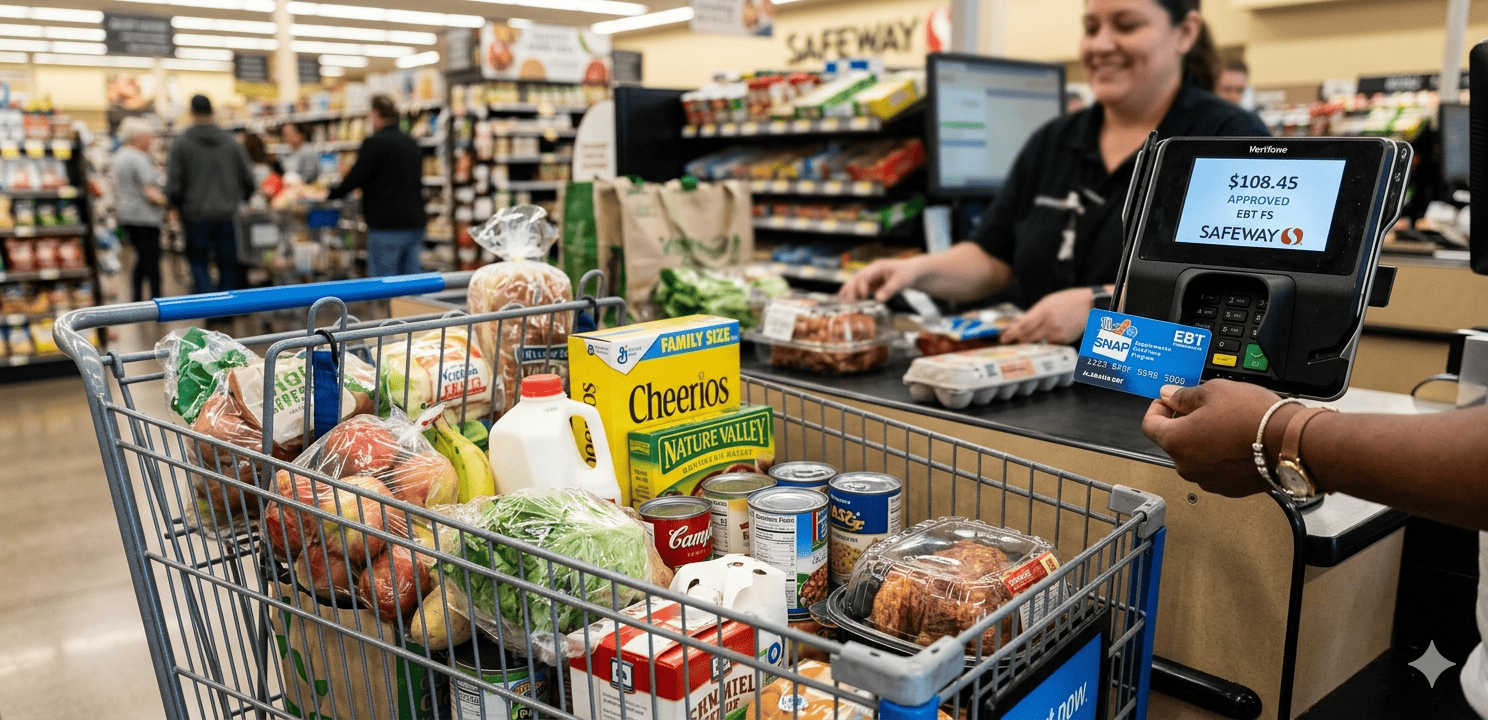
Data from the United States Department of Agriculture (USDA) highlights a very rapid increase in online grocery purchases with SNAP benefits over recent years. At the start of 2020, only a handful of households engaged in online grocery shopping with SNAP benefits. In February 2020, online EBT share of redemptions benefits were less than $3 million, accounting for only 0.1% or less of total SNAP spending.
The change was huge after a few months. Online SNAP purchases by the end of 2020 had gone up to around $1.5 billion. This growth did not stop in the next few years. In 2021, online redemptions soared to $6.2 billion, and approximately 4.5% of total SNAP benefits were spent online.
By the beginning of 2022, the proportion of SNAP spending that happened online had increased to around 5.7%. The USDA Economic Research Service’s study also indicates that online SNAP and Pandemic EBT (P-EBT) transactions climbed from about 1% of total benefits in mid 2020 to close to 9% by the end of 2023.
Another strong piece of evidence of growth is the rise in the number of retailers participating. In 2020, a mere 6 retailers were authorized to accept SNAP payments online. By 2023, this number had increased to over 340 approved retailers. In addition, the USDA online purchasing pilot program was expanded to the entire country, and from June 2023, it was available in all states, thus offering SNAP families more opportunities for online grocery shopping.
The quantity of households using the SNAP online purchasing feature is also on the rise rapidly. In March 2020, only about 35, 000 SNAP households purchased groceries online. By 2022, nearly 4 million households were shopping online with their benefits. Such a sharp surge is regarded as one of the fastest digital adoption trends in government benefit programs.
The change was driven by several factors. Safety measures related to the pandemic made people want to shop without any contact. On the other hand, grocery stores further developed their online ordering systems. More and more people having smartphones and the internet have also helped to make online grocery shopping a convenient option.
Besides that, big retailers like Amazon and Walmart were among the first ones to help make the SNAP online purchasing program available across the country.
Why SNAP online purchasing Matters for Retailers
The rise in SNAP online purchasing is opening up fresh and exciting avenues for grocery retailers and food-related businesses nationwide. As increasing numbers of households start buying groceries online with their SNAP benefits, stores that accept EBT payments online will be positioned to serve a wider range of customers.
Above all, it provides retailers with an entry point to a vast consumer market. The USDA oversees the SNAP program that provides for millions of families monthly. Such families rely on the program for replenishing their groceries. Offering online EBT payment methods will allow retailers to step in this vast consumer segment and maintain a steady flow of sales from dedicated customers.
Secondly, grocery shopping online is a quickly growing trend in the country. An increasing number of people would rather order the groceries they need via the internet than go to the store and shop for their needs in person. By giving consumers online EBT payment options, retailers can reach this expanding group of consumers and thus gain a bigger share of the online grocery market, which leads to more orders for their business.
Thirdly, the competition among the retailers has intensified due to the introduction of online SNAP payments. While the program expansion was largely driven by the big players like Amazon and Walmart at the launch, many other retailers have joined the program as well.
Finally, the expansion of the online buying initiative is turning the lights on for small retailers, along with the big ones. Typically, large retailers have led the way in implementing the online SNAP payment program, owing largely to their financial position for getting the necessary technology, but through the different schemes aimed at helping small retailers by granting them the tools to be able to handle the program, it is expected that the small retailers will get their share, too. In fact, figures from the industry reveal that independent retailers are responsible for a third of the national sales.
Technical Requirements for SNAP Online Acceptance
Retailers who want to accept SNAP payments for online grocery ordering have to comply with some technical and legal regulations. These rules will ensure that SNAP benefits are properly utilized and, at the same time, that the transaction process is secure both for the retailer and the customer.
The very first major technical requisite is the capability to provide a secure EBT payment operation. This means, the retailer should be capable of handling Electronic Benefit Transfer payments securely through the online checkout system. Besides that, the retailer should engage a payment service provider authorized to process SNAP payments per the guidelines of the United States Department of Agriculture.
A further major technical requirement is the ability to separate between eligible and non-eligible items. According to the SNAP program, the benefits can be spent only on eligible food products. Some items, for instance, household supplies, alcohol, and hot foods, are not eligible. As a result, the online grocery system should be able to recognize eligible products and compute the payment accordingly.
Retailers must also stick to SNAP rules on pricing and taxation. For example, it is required that prices offered to SNAP customers online are the same as those offered in the physical store. Besides, the retailers have to abide by the taxation requirements that depend on the SNAP criteria for eligibility.
Secondly, it is imperative that the online grocery stores form seamless connections with the EBT payment systems so that the payment processes are secure and smooth, and the customer is able to make the payment without any difficulties.
Thirdly, retailers also need to appreciate that the SNAP benefit is only for food purchases and it cannot be used for any extra charges, delivery charges, service charges, or tips. Therefore, the online checkout system must be capable of ensuring that the payment is divided between the SNAP benefit and the other payment methods.
Challenges Retailers Still Face
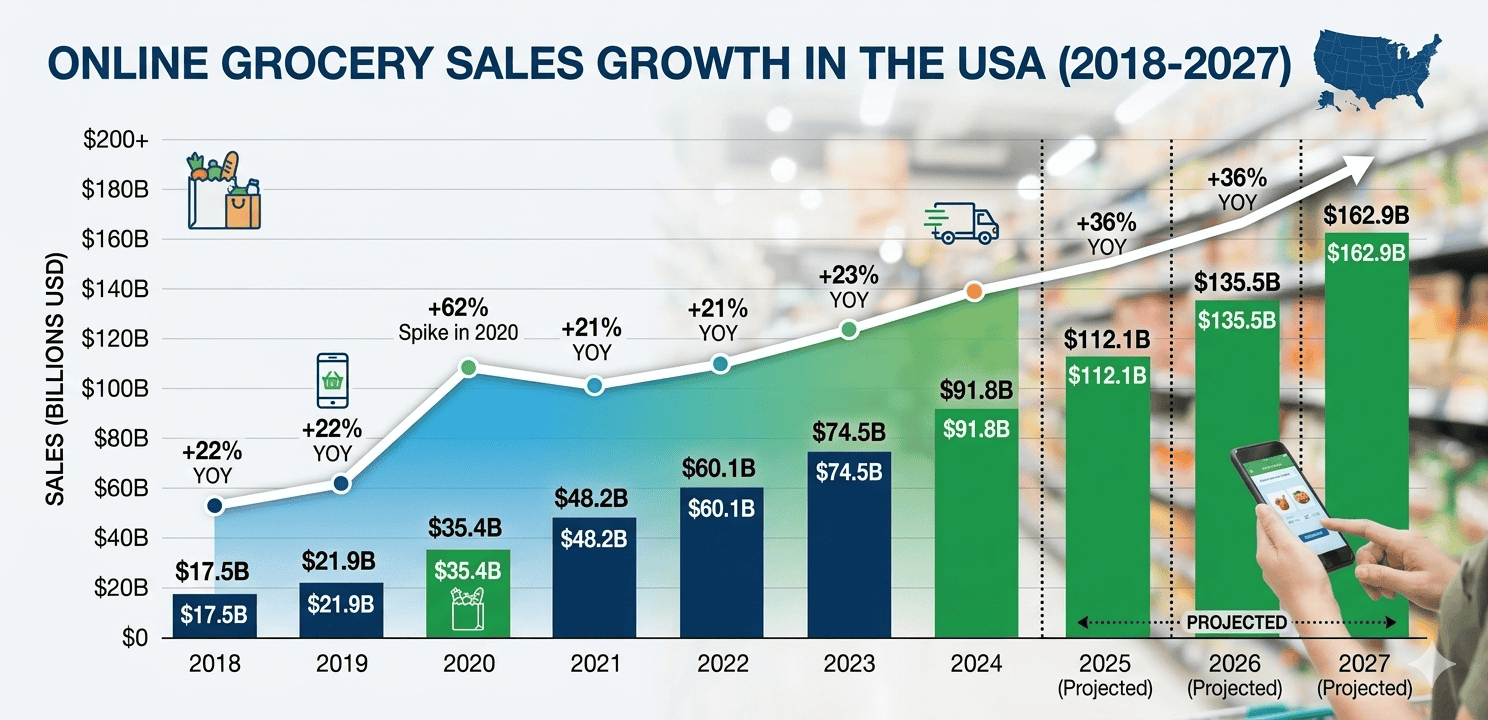
Even with such growth, retailers still encounter certain hiccups in the SNAP online purchase system.
Firstly the prime challenge is technology-related. Small neighborhood stores are not equipped with the technology to accept SNAP payments online. In fact, this has become a major stumbling block, particularly for small businesses, as it is very expensive to set up an online platform that can accept EBT payments.
Secondly, besides the technology, another obstacle is adhering to federal regulations. Federal regulations strictly govern the items that can be purchased using SNAP benefits. Non-compliance with such regulations can lead to very serious consequences, including being kicked out of the program.
Lastly, business complexity poses a challenge. In order to establish an online shopping system, the nutritionally appropriate and ineligible products in the customer’s shopping cart have to be identified by a special software that also calculates the payment and applies taxes accordingly, because of these, some smaller grocery stores have still not implemented the SNAP system even though there are customers’ demands for it. However, this situation is likely to be reversed with the advent of better technology.
What Retailers Should Do Now
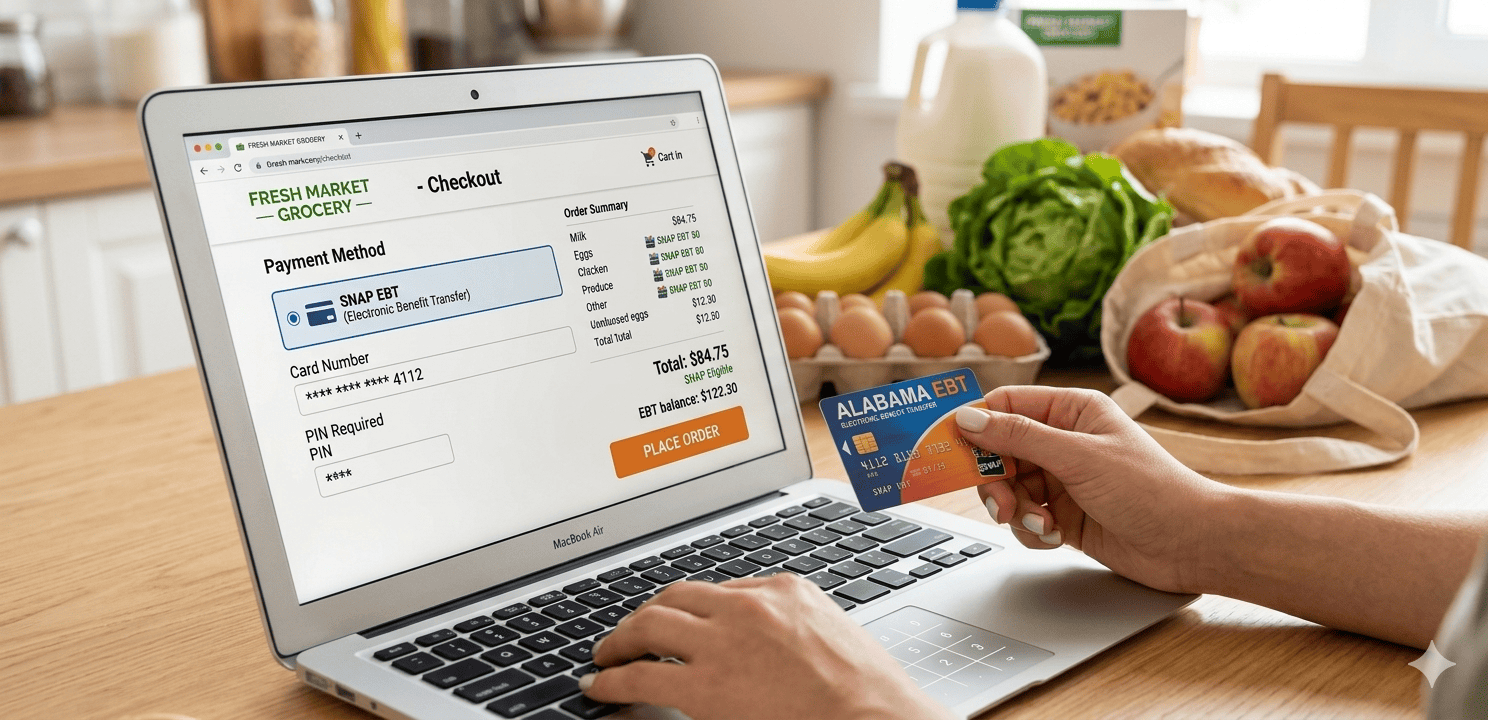
Retailers aiming to be industry leaders, more so in the grocery sector, should commence gearing up for the rising trend of online SNAP purchases. The first move to ensure that the online shop is capable of catering to the growth of online SNAP purchases is to look into the online store’s e-commerce features. In other words, the online store must confirm that it is capable of supporting online grocery shopping without any hiccups.
Secondly, make sure that the online store is capable of processing online EBT transactions. To explain, the SNAP client should be able to use their EBT benefits to pay for the groceries they selected online.
Thirdly, ensure to meet the requirements of the SNAP program, such as being able to identify which products are eligible for SNAP benefits. This will help to separate eligible products from ineligible ones so that shoppers can easily find eligible products that they can purchase using their benefits. Another major element is enhancing product listings. It broadly refers to making sure accurate product information is provided, thereby supporting EBT users to shop online with ease.
Making these considerations from the very beginning would mean that retailers would be better prepared to serve SNAP customers online, thus taking advantage of the expanding online grocery shopping market.
Conclusion
Changing lifestyles and increased economic pressure have led to a rise in online grocery shopping among SNAP households, and this is probably the trend that digital redemption of benefits will become the norm for the food retail industry. In fact, the USDA numbers clearly show a huge rise in the number of households, spending, and retailers in a very short time. Also, the steadily rising online EBT transactions indicate that the digital purchase of groceries is likely to be the norm in the future.
FAQs
Should retailers accept SNAP online?
Retailers ought to consider accepting SNAP online because it can open the door to millions of households that use SNAP benefits, thereby boosting their sales.
What are the online SNAP redemption statistics?
The USDA states that SNAP is one of the fastest-growing programs, with millions of households relying on SNAP to buy groceries online.
How will small retailers be able to accept online SNAP?
Small retailers can go about accepting online SNAP payments by getting the processors that are approved for SNAP and setting up online platforms for SNAP payment acceptance.
Does accepting SNAP online increase sales?
When a retailer begins to accept SNAP online, they will be able to gain the attention of loyal customers, which may result in increased revenue for the business.
What are the online SNAP acceptance compliance requirements?
The requirements for SNAP acceptance compliance online involve adhering to SNAP rules, clearly differentiating between eligible and non-eligible items, and handling EBT payment systems that have been sanctioned.
What does the SNAP OPP research paper explain?
SNAP OPP research paper looks at the operation of SNAP Online Purchasing Pilot, analyzing the rollout of the program in various states, the involvement of retailers, and the ways in which giving access to online groceries can increase food availability for SNAP households throughout the United States.