By Julia Koroleva March 24, 2026
Managing SNAP-eligible item files is essential for retailers who accept EBT payments. A well-maintained SNAP-eligible item file helps to ensure that only approved products are processed correctly at checkout. By keeping UPC and PLU mappings accurate and up to date, stores can reduce errors, remain compliant with regulations, and provide a smooth, reliable shopping experience for customers.
What Counts as SNAP Eligible Foods List?
SNAP primarily focuses on providing basic food for people by enabling them to purchase items they can cook and eat at home. This means that the program largely pertains to categories of items such as fresh fruits and vegetables, raw or frozen meat, dairy, bread, cereals, as well as a large variety of packaged pantry items.
Basically, these food items are considered staple foods and constitute major parts of the food that can be purchased with SNAP benefits. That being said, there are some cases where the law is very clear about which purchases will be disallowed.
For instance, items like alcohol and tobacco would not be supported by the program even if they are the least expensive. Vitamins, dietary supplements, and pet food are other examples of items that should not be included under any condition.
Another significant limitation concerns hot or ready-to-eat foods intended for immediate consumption. The difference is that a cold sandwich from a deli may qualify in some situations, but the same sandwich, heated and sold as ready-to-eat, would not.
The above-mentioned set of rules is formulated and controlled by the United States Department of Agriculture. Hence, your POS system must correctly show these kinds of separations to prevent any misunderstandings at the point of sale.
Generally, in actual market scenarios, customers don’t only buy SNAP-eligible items. Their shopping cart will most likely have a combination of eligible and non-eligible products. It is at this point that split tender functionality is very useful. An efficiently set-up POS will automatically divide the total sale into two parts. The SNAP-eligible food list is charged to SNAP, and the remaining balance is sent to another payment method, such as a debit or credit card or cash.
If the system cannot correctly split a payment, the whole transaction will either fail or take longer.
| Category | Allowed Items | Not Allowed Items |
| Grains | Bread, rice, pasta, cereals (packaged, unprepared) | Hot or ready-to-eat grain-based meals |
| Dairy | Milk, cheese, yogurt | Hot or prepared dairy-based items |
| Protein | Eggs, canned fish, frozen or raw meat, peanut butter | Hot meats, cooked or ready-to-eat items |
| Fruits & Vegetables | Fresh, frozen, or canned fruits and vegetables | Prepared or hot vegetable dishes |
| Snacks & Beverages | Chips, soft drinks, snacks, ice cream | Hot or ready-to-eat snacks |
| Deli Items | Cold sandwiches, cold packaged deli foods (in some cases) | Hot deli foods, heated sandwiches |
| Alcohol & Tobacco | Not allowed | Alcohol, cigarettes, tobacco products |
| Vitamins & Supplements | Not allowed | Vitamins, dietary supplements, medicines |
| Energy Drinks | Drinks with “Nutrition Facts” label | Drinks with “Supplement Facts” label |
| Non-Food Items | Not allowed | Cleaning supplies, pet food, paper goods, household items |
Special Case: Restaurant Meals Program (RMP)
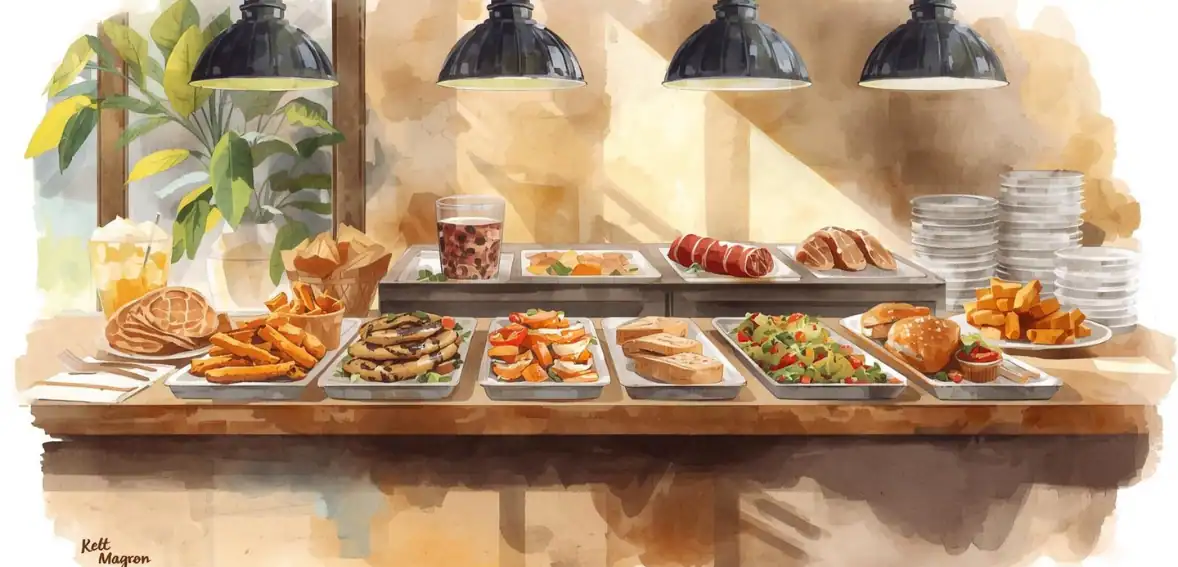
The Restaurant Meals Program is a unique option that allows certain SNAP recipients to use their benefits to purchase ready-to-eat meals from participating restaurants. The goal of this program is to help those who, for one reason or another, are unable to prepare their own meals, e.g., the elderly, disabled, or homeless.
Since RMP is not offered in every state, participation requires specific approval. Hence, retailers or restaurants are required to submit an application and obtain approval before accepting SNAP for prepared meals under this program. If your business is located in an RMP-enabled state, your POS system needs to be set up differently for those locations. You must have a special configuration that permits eligible prepared foods to be processed properly under SNAP, while other places will continue to have the standard restrictions. Besides that, you have to make sure that only authorized outlets use this feature. Treating RMP regulations for all stores without the right authorization will most probably get you into compliance problems.
Getting Tax Handling Right
Calculating tax on SNAP purchases is a delicate process. SNAP regulations state that any part of a purchase made with SNAP benefits is tax-free. However, things get tricky if the transaction includes a mix of eligible and non-eligible items. In this case, your point-of-sale system should figure out that tax is due only on the non-eligible part of the purchase.
Let’s say a buyer in a store picks groceries plus a non-eligible item, such as a health supplement. The system will tax only the health supplement, and the portion that is paid by SNAP remains tax-free. The computer system must be able to apply this principle to each separate item and not just to the overall total. Besides, it should work without any glitches for both in-store purchases and online purchases. Having a sophisticated POS tax processing means that tax is distributed properly among various types of payment. This way, the risk of charging customers extra is greatly reduced.
Where Eligibility Logic Fails in Stores
Mis-mapped UPCs
Each packaged product in a store is identified by a UPC mapping SNAP code, and this code determines if the item can be bought with EBT or not. If a product is mapped incorrectly, the POS will handle it incorrectly. This is normally the case when new items are introduced without proper checks or when supplier data is wrong. Even a minor mapping error can lead to billing errors and compliance issues.
Inconsistent PLUs
Fresh fruits and vegetables are managed using PLU SNAP eligibility codes rather than UPCs. Problems arise when employees use different PLUs for the same type of items or don’t keep them consistent throughout the store. For instance, organic and non-organic produce can get confused, resulting in the wrong product being detected at checkout. These small discrepancies can cause confusion and lead to inaccurate transactions.
Scale Items and Labeling Issues
In-store weighing and labeling of items such as meat, cheese, and deli products adds another layer of complexity. Wrong eligibility information may appear on the label if the weighing scale or labeling system is not correctly configured. The issue becomes even more complicated when the products are packed together or are customized.
Prepared Foods Confusion
The biggest source of errors is misunderstanding the prepared food rules. Normally, hot or ready-to-eat food items are not SNAP eligible, but certain cold items are allowed. For instance, a cold sandwich might be allowed, but the heated version of that same item is not. If such distinctions are not properly reflected in the system, it will result in constant billing errors and pose compliance risks.
Maintenance Routine for SNAP Item Accuracy

Weekly Exceptions
Review your transaction reports weekly to catch any SNAP-related errors. Check for failed transactions, overrides, or items that cause repeated checkout problems. Fixing the same issue over and over doesn’t work. Find the real cause instead. That way, you fix it once and prevent mistakes later.
Vendor File Updates
Update product data from suppliers regularly. Every item needs accurate SNAP eligibility at the UPC level. Don’t depend solely on vendor info. Double-check snack, beverage, and deli categories. These items are most likely to have mistakes.
Seasonal Item Checks
Seasonal items are added quickly, which increases the risk of incorrect tagging. During holidays or sales periods, take time to review these products. Ensure they’re correctly classified so checkout runs smoothly during high demand.
Following Deli Item Mapping SNAP Rules
Deli and prepared food areas are different, so they need separate focus, in addition to setting up your POS system to logically distinguish between hot and cold items. The smartest approach is to assign each item its own code, recorded in a SNAP-eligible item file and a non-eligible item file. As an example, a cold rotisserie chicken and a hot one should always be kept as separate items. In this way, it will be almost impossible to mix things up, and you will always be able to process SNAP correctly.
Scale and System Syncing
When you weigh items such as fruits, vegetables, or meats, your scale system and POS data must be consistent. Every PLU applied at the scale should be in line with SNAP eligibility rules. Regular checks and small audits can help you identify and rectify discrepancies before they become major issues.
Staff Training and Documentation
Your team is your most valuable asset when it comes to ensuring accuracy. Not only should you train your employees on the fundamental SNAP regulations, but you should also give them practical practice on the system usage. For handling challenging cases such as mixed items or custom orders, provide a clear set of rules and instructions. A well-educated staff means fewer errors and more sales.
Why Every Retailer Needs a Smart POS System for EBT Item Mapping

A smart POS system is more than just a billing tool. It is like the brain behind your everyday processing that controls the store, especially when you accept EBT. If you are a retailer accepting EBT, a POS system is a major element in ensuring that only approved foods are allowed, records are always accurate, and transactions are processed flawlessly.
One of the top advantages is the potential for faster, smoother checkouts. A smart POS system can instantly recognise the list of EBT-approved and non-approved items. This not only helps to clarify things at the counter but also prevents any hold-ups during billing. Shoppers are not going to be kept standing while their items get checked one by one, that’s why incorporating a smart POS system will definitely lead to a better shopping experience.
Secondly, another significant perk is having an inventory system that tracks in real time, along with the proper mapping of UPCs and PLUs. A store’s product comes with a code, and the POS system can determine the item’s EBT status. Therefore, it guarantees that only approved EBT products are paid by EBT, while others are automatically placed separately. Besides, it immediately updates your inventory records, so you always know what is in stock.
Managing transactions is a core function of smart POS systems. With these tools, you can observe which EBT products sell the most, follow how people buy over time, and gain clearer insight into what customers actually need. This data supports smarter inventory decisions and reduces overstocking or missing out on needed goods.
Thirdly, support for several payment types is a major benefit. A smart POS can manage mixed payments without issues. For instance, if a customer buys both EBT-eligible and ineligible items, the system applies EBT separately from the total amount and processes the rest with cash or card.
Lastly, smart POS systems also help to strengthen customer trust. They enable fast, accurate transactions and reduce mistakes. When shoppers notice that purchases are completed quickly and correctly, they tend to come back more often.
The Harsh Consequences of Non-Compliance
If a retailer is not properly approved for USDA SNAP/EBT or is still relying on manual methods to track eligible items, it can lead to serious problems. Without a proper system in place, mistakes are more likely to occur, putting the business at risk.
Over time, authorities can request detailed records, and if those records are unavailable or unclear, it can trigger audits. These audits can be time-consuming and stressful for store owners.
Legal and financial consequences are also possible. Retailers are issued warnings or can be fined if any non-compliance is found. If the situation is more serious, retailers may be temporarily suspended from accepting SNAP/EBT payments, which will directly impact their sales. If the breaches persist or are deemed serious, the store may be permanently prohibited from participating in the SNAP program. This effectively cuts the store off from a major customer demographic that relies on EBT.
In the worst cases, where there is evidence of misuse or fraud, a legal claim may even be initiated. This could result in hefty fines and significant harm to the business’s reputation.
Basically, disregarding SNAP/EBT regulations can lead to significant troubles. Adopting correct systems and procedures not only helps to avert such issues but also ensures that your business remains both safe and compliant.
Conclusion
Properly handling SNAP product data is crucial to running a seamless, appropriate retail business. When UPCs, PLUs, and scale items are correctly set up and consistently updated, it results in fewer mistakes and better checkout accuracy. Adhering to straightforward POS eligibility rules ensures transactions are processed properly, helping retailers mitigate risks while simultaneously enhancing customer experiences.
FAQs
Where do we verify whether an item is SNAP-eligible?
To check for SNAP eligibility, first use your POS system database and then consult the USDA guidelines. Also, make sure to have an accurate UPC or PLU mapped in your production file; this will ensure ineligible item flags are POS immediately at checkout.
Are energy drinks eligible under SNAP?
Only nutrition-fact-labeled drinks can qualify for SNAP; most energy drinks are labeled as supplements and will not qualify.
How do we handle deli items that can be hot or cold?
SPLCs must be double-assigned to deli items so that only cold items are clearly recorded as SNAP-eligible. At the checkout, even if the hot ones might be selected inadvertently, they can be excluded.
What’s the best way to review eligibility mapping errors?
On a weekly basis, use POS reports to monitor eligibility mapping errors, with emphasis on the repeated ones, overrides, and high-risk categories, to maintain accuracy.
What plays a major role in the deli mapping of SNAP rules for deli items?
You must have separate PLUs for hot and cold deli items to meet the SNAP deli item mapping requirements. This way, you will ensure that items will be charged as eligible without any mistakes.
What are the ways to ensure that PLU SNAP eligibility is valid in stores?
It will be useful for you to keep PLU SNAP eligibility up-to-date by physically checking the actual codes, refreshing product information, and making sure that scale systems reflect what is set as eligible at POS.
What is the role of continuous PLU mapping in keeping SNAP compliant?
When you consistently do PLU mapping, it will be an effective way to prevent incorrect classification, ensure proper charging, and minimize the risk of compliance problems related to SNAP transactions.