
SNAP Transaction Monitoring is one of the most important responsibilities for any retailer authorized to accept EBT payments. It helps store owners, managers, and staff keep transactions accurate, maintain proper records, identify unusual activity, and support compliant day-to-day operations.
Every EBT transaction creates a digital record. That record may include the transaction date, time, purchase amount, terminal, authorization details, and other payment information.
These records help support USDA SNAP transaction monitoring, EBT transaction reviews, SNAP fraud prevention, and retailer accountability. USDA notes that EBT transactions are electronically processed and recorded, and that transaction records include details such as date, time, and dollar amount.
For retailers, monitoring is not only about avoiding problems. It is also about running a cleaner operation. When managers review SNAP transaction reporting, reconcile settlements, track inventory, and document exceptions, they are better prepared for audits, customer questions, staff errors, and operational issues.
SNAP-authorized retailers should think of monitoring as a routine business control. Just as a store reviews cash drawers, credit card batches, inventory shrink, and supplier invoices, it should also review EBT activity.
Consistent monitoring can help catch mistakes early, reduce suspicious activity, and show that the business takes SNAP retailer compliance seriously.
What Is SNAP Transaction Monitoring?
SNAP Transaction Monitoring is the process of reviewing EBT transaction activity to identify unusual patterns, compliance concerns, reporting errors, or suspicious payment behavior. For retailers, this usually means checking EBT sales reports, transaction logs, refunds, voids, settlement records, inventory movement, cashier activity, and supporting documentation.
At the oversight level, transaction monitoring may involve reviewing EBT transaction data for patterns that do not match normal retail activity.
Examples may include unusually large transactions, repeated purchases in short timeframes, suspicious refund behavior, transactions outside expected store hours, or SNAP sales that appear inconsistent with a store’s inventory.
USDA’s Office of Inspector General has described EBT as the electronic payment system used to distribute SNAP benefits and has emphasized oversight of SNAP and EBT processes.
For retailers, the goal is practical: know what happened at the register, confirm that it was handled correctly, and keep records that explain the transaction if it is later questioned. A good monitoring process should help answer basic questions:
- Was the transaction processed through the correct tender type?
- Were eligible and non-eligible items separated correctly?
- Was the amount consistent with the customer’s purchase?
- Were refunds, voids, or corrections documented?
- Do EBT sales align with inventory and supplier purchases?
- Can the store produce records if asked?
SNAP compliance monitoring also helps retailers identify training gaps. A cashier who repeatedly uses manual entry, issues frequent voids, or struggles with split tender transactions may need coaching.
A store with inconsistent item eligibility files may need better POS maintenance. A manager who does not reconcile settlement reports may miss errors until they become bigger issues.
SNAP Transaction Monitoring is not about assuming wrongdoing. It is about building reliable procedures that protect the store, customers, staff, and program integrity.
Why SNAP Transaction Monitoring Is Important
SNAP Transaction Monitoring matters because EBT payments come with specific responsibilities. Retailers are trusted to accept benefits only for eligible food items, process transactions accurately, maintain records, and prevent misuse. When monitoring is weak, small errors can become recurring problems.
Monitoring supports program integrity. SNAP benefits are intended for eligible purchases, and transaction oversight helps reduce abuse. USDA retailer training materials warn retailers against trafficking and instruct stores to protect their authorization by following program rules.
It also supports operational accuracy. Many compliance issues begin as ordinary mistakes: a cashier chooses the wrong tender type, an item is misclassified in the POS, a refund is handled incorrectly, or a manager fails to reconcile daily EBT totals. If these mistakes are found quickly, they can usually be corrected through training, documentation, and better controls.
For retailers, strong monitoring can help:
- Reduce transaction errors
- Improve cashier accountability
- Strengthen refund and void controls
- Support inventory accuracy
- Prepare for SNAP audit monitoring
- Improve daily reconciliation
- Detect unusual transaction patterns
- Maintain better documentation
EBT compliance checks are also important because reviews may focus on whether the store’s transaction activity makes sense compared with its business model.
A small market, convenience store, grocery store, farmers market vendor, or specialty food retailer may each have different transaction patterns. Monitoring helps managers understand what is normal for their own operation.
How SNAP EBT Transactions Are Monitored

SNAP EBT transactions may be monitored through transaction data, POS reports, settlement records, inventory comparisons, documentation reviews, and compliance evaluations. At the retailer level, monitoring should combine technology with human review. POS systems can produce reports, but managers still need to interpret them.
USDA explains that SNAP customers use an EBT card at a POS device and enter a PIN, while the clerk enters the exact food purchase amount. The transaction is then deducted from the customer’s SNAP account and credited to the retailer’s bank account. That process creates a payment trail that can be reviewed later.
| Monitoring Area | What Is Reviewed | Why It Matters |
| Transaction amount | Large, repeated, or unusual purchase totals | Helps identify activity that may not match normal sales patterns |
| Transaction frequency | Back-to-back EBT purchases, repeated card activity, unusually high daily volume | May indicate cashier errors, unusual customer behavior, or review-worthy patterns |
| Refunds and voids | Reversals, corrections, return activity, manager overrides | Helps confirm adjustments are legitimate and properly documented |
| Manual entries | Keyed transactions, fallback procedures, exception handling | Excessive manual activity may require review or staff retraining |
| Inventory consistency | SNAP sales compared with eligible inventory and supplier invoices | Helps show that sales are supported by actual food inventory |
| Cashier activity | Transactions by employee, register, lane, or terminal | Supports accountability and training |
| Settlement records | Daily EBT deposits, batch totals, processor reports | Helps verify that POS totals match payment settlement data |
| Audit trails | Transaction IDs, timestamps, terminal IDs, adjustment notes | Helps explain activity during EBT transaction reviews |
Good EBT payment monitoring systems make this easier by organizing transaction data into searchable reports. A store should be able to review daily EBT sales, identify refunds and voids, pull transaction IDs, match receipts to reports, and compare EBT totals to settlement deposits.
For more detail on what records to save, retailers may find this guide on EBT transaction logs and audit trails useful.
Transaction Amount and Frequency Reviews
Transaction amount and frequency reviews focus on whether EBT purchases look reasonable for the store’s size, inventory, hours, and customer behavior. A single large transaction is not automatically a problem.
Many customers purchase groceries on larger trips. However, repeated high-dollar transactions, especially if they happen close together or do not match available inventory, may attract attention during SNAP retailer transaction analysis.
Managers should understand their store’s normal EBT ticket range. A grocery store with large carts may naturally have higher average tickets than a small convenience store. A farmers market vendor may have seasonal spikes. A specialty store may sell high-value eligible foods. The key is whether transaction patterns are explainable and supported by records.
Retailers should review:
- Average EBT ticket size
- Highest daily EBT transactions
- Multiple transactions from the same register in short periods
- Unusual activity outside normal traffic patterns
- Repeated transactions just below common price points
- Transactions inconsistent with available food inventory
Inventory and Sales Pattern Comparisons
Inventory and sales comparisons help determine whether SNAP sales are supported by the store’s actual stock. If a retailer reports significant EBT sales but lacks supplier invoices, inventory records, or sufficient eligible food items, that inconsistency may create concern.
USDA has warned SNAP retailers not to buy store inventory with SNAP benefits and emphasizes knowing where store inventory comes from.
A strong inventory process should show that eligible food sales are connected to legitimate purchasing and stocking activity. Retailers should keep supplier invoices, delivery records, purchase logs, item lists, and inventory counts. These records help explain how the store could support the level of EBT sales shown in transaction reports.
This is especially important for smaller stores. If a store has limited shelf space but unusually high SNAP redemptions, reviewers may look for documentation showing inventory turnover. Good records can help explain frequent restocking, supplier delivery schedules, perishable goods movement, or high-demand product categories.
Retailers should also maintain accurate SNAP-eligible item files in the POS. Incorrect UPC or PLU mapping can cause ineligible items to process incorrectly or eligible items to be rejected. For operational guidance, see this resource on managing SNAP-eligible item files.
Refunds, Voids, and Manual Adjustments
Refunds, voids, and manual adjustments deserve close attention because they change the original transaction record. A legitimate refund or void is part of normal retail operations, but excessive or poorly documented adjustments may raise compliance questions.
Managers should review refund and void reports daily. Each adjustment should have a clear reason, a manager’s approval when required, a transaction ID, the original receipt, the cashier ID, and any customer-facing documentation the store normally keeps. If the POS allows reason codes, staff should use them consistently.
Manual adjustments can be riskier when they bypass normal item-level controls. For example, a manual EBT entry without item detail may be harder to explain later. If manual entry is allowed, retailers should limit access, require manager approval, and review usage reports.
Retailers should watch for:
- Repeated refunds by the same cashier
- Voids after approval
- Refunds without original receipts
- Manual entries during normal system availability
- Adjustments near closing time
- Missing reason codes
- Corrections without manager review
For a closer look at adjustment workflows, review this guide on EBT refunds, voids, and returns.
Common SNAP Transaction Patterns That May Raise Concerns
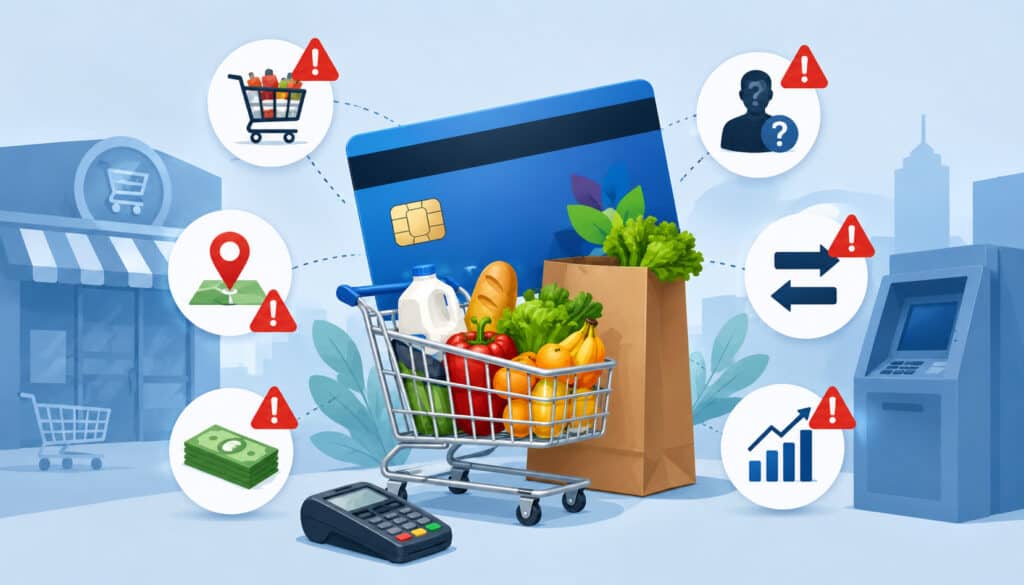
Certain transaction patterns may draw attention during SNAP compliance monitoring. These patterns do not automatically prove a violation, but they should be reviewed and documented when they appear. Retailers that monitor these patterns proactively are better prepared to explain legitimate activity.
Repeated high-dollar transactions are one example. A store may have valid reasons for higher tickets, such as family grocery purchases, bulk items, or seasonal demand. However, if high-dollar EBT sales are frequent and inventory records do not support them, the pattern may appear unusual.
Rapid back-to-back purchases may also require review. A busy store can process many EBT transactions quickly, especially during peak hours. But repeated transactions from the same card, same cashier, or same register within very short intervals should be checked.
Other patterns include:
- EBT sales that exceed expected eligible food inventory
- Unusual overnight or after-hours activity
- Frequent manual card entries
- Excessive refunds or voids
- Repeated transactions at round-dollar amounts
- EBT activity inconsistent with store size or product mix
- High SNAP sales with limited supplier invoices
- Frequent split tender errors
- Refunds without matching original purchases
SNAP fraud prevention starts with knowing what normal looks like. A store near a transit stop, school, market area, or residential neighborhood may have different patterns than a rural vendor or specialty store. Monitoring should account for the store’s real operating environment.
How Retailers Can Improve SNAP Compliance Monitoring

Retailers can improve SNAP compliance monitoring by creating repeatable procedures. The best systems are simple enough for managers to follow daily but detailed enough to support EBT transaction reviews when needed.
Start with written procedures. Every store should have a clear process for EBT sales, split tenders, refunds, voids, manual entries, receipt handling, settlement reconciliation, and exception reporting. Staff should know who can approve adjustments and where records are stored.
Second, train employees regularly. Cashiers and managers should understand eligible item rules, customer privacy, correct tender selection, PIN procedures, split tender handling, declined transactions, and refund requirements. Training should not be limited to new hires. Refresher training helps reduce drift over time.
Third, organize records. Keep transaction logs, receipts, supplier invoices, inventory records, settlement reports, POS reports, and adjustment documentation in a consistent system. Digital backups are useful, but files should be named and stored in a way that managers can retrieve them quickly.
Retailers should also review data regularly:
- Daily: EBT totals, refunds, voids, manual entries
- Weekly: exception reports, cashier trends, inventory movement
- Monthly: settlement reconciliation, supplier invoice matching, category sales
- Quarterly: training records, POS permissions, item eligibility files
Daily Transaction Reviews
Daily transaction reviews help retailers spot unusual activity before it becomes a long-term pattern. A daily review does not need to be complicated. The manager should compare POS EBT totals, settlement reports, refund and void activity, manual entries, and cashier exception reports.
The review should answer a few practical questions. Did EBT totals match expected register activity? Were all refunds and voids documented? Did any cashier process unusual activity? Were there failed transactions, duplicate attempts, or customer complaints? Did the batch settle correctly?
Daily reviews also help protect employees. If a cashier makes a mistake, early review allows the manager to retrain quickly. If a POS setting is wrong, it can be fixed before more transactions are affected. If suspicious behavior appears, the store can investigate while details are still fresh.
A daily review checklist may include:
- Print or export EBT sales report
- Compare EBT totals to register closeout
- Review refunds and voids
- Check manual entries
- Match settlement data
- Note exceptions
- Save reports in the daily close folder
This process creates a reliable audit trail and supports stronger SNAP transaction reporting.
Employee Training and Oversight
Employee training is one of the strongest controls in SNAP retailer compliance. Cashiers are the people who handle EBT transactions in real time, so they need to know the rules, the POS workflow, and the store’s escalation process.
Training should cover more than button clicks. Staff should understand eligible and non-eligible items, how split tender works, how to respond to declined transactions, why customer privacy matters, and when to call a manager. They should also know that manual entries, refunds, and voids require careful handling.
Managers should monitor employee activity without creating a blame culture. The goal is accuracy and accountability. If one cashier has a high number of voids, that may indicate confusion, not misconduct. Coaching can prevent repeat errors.
Good oversight includes:
- Unique cashier logins
- Manager approval for refunds and overrides
- Limited access to manual entry
- Regular review of cashier reports
- Documented refresher training
- Clear escalation steps
For more staff-focused guidance, retailers can review this article on EBT cashier training.
The Role of POS and EBT Systems in SNAP Monitoring
Modern POS and EBT systems play a central role in SNAP Transaction Monitoring. A strong system does more than accept payments. It helps track sales, separate eligible and non-eligible items, record refunds and voids, generate reports, preserve audit trails, and support reconciliation.
A reliable POS should capture transaction IDs, timestamps, register IDs, cashier IDs, tender types, item details, authorization responses, and adjustment records. These data points help managers investigate errors and support EBT transaction reviews.
Integrated POS systems are especially helpful because they can connect item-level sales to payment records. This makes it easier to confirm that EBT was used only for eligible items. Stand-beside terminals may still work for some retailers, but they can create more manual reconciliation work if item-level data is not connected to the EBT transaction.
EBT payment monitoring systems should also support security. Managers should be able to limit access by role, require approvals for sensitive actions, and review changes to item files or transaction records. Secure user permissions reduce the risk of cashier misuse and unauthorized adjustments.
Important POS monitoring features include:
- EBT tender reporting
- Item eligibility controls
- Refund and void reporting
- Manual entry logs
- Cashier-level reporting
- Settlement reconciliation
- Inventory category reporting
- Exportable audit trails
- Secure manager permissions
- Digital receipt lookup
SNAP Recordkeeping and Reporting Best Practices
Strong recordkeeping is the backbone of SNAP audit monitoring. If a transaction is questioned, the retailer’s records should help explain what happened, who handled it, when it occurred, and why any adjustment was made.
Retailers should maintain both transaction records and business records. Transaction records show payment activity. Business records show that the store had the inventory, supplier relationships, and operating activity to support those sales.
Important records include:
- EBT transaction logs
- POS reports
- Daily closeout reports
- Settlement reports
- Refund and void documentation
- Manual entry reports
- Customer receipts where applicable
- Supplier invoices
- Inventory counts
- Delivery records
- Item eligibility files
- Cashier training records
- Manager approval logs
- Equipment or system issue notes
Records should be organized by date, location, register, and report type. Multi-location operators should avoid mixing records across stores. Each location should have its own files, reports, supplier documentation, and reconciliation process.
Digital backups are useful, but they should be secure. Sensitive payment information should not be stored unnecessarily. Receipts and logs should avoid full card numbers and should follow applicable payment security requirements.
SNAP transaction reporting should also be consistent. If the store exports reports daily, use the same format and naming convention. If managers write exception notes, use a standard form. If refunds require approval, keep evidence of approval with the transaction record.
What Happens During SNAP Reviews or Investigations?
During SNAP reviews or investigations, retailers may be asked to provide records, explain transaction patterns, verify inventory, or respond to compliance questions. The exact process can vary depending on the issue, but documentation is always important.
A review may focus on transaction activity. This can include EBT transaction amounts, frequency, timing, refunds, voids, manual entries, and sales patterns. Reviewers may compare SNAP sales to inventory records, supplier invoices, store size, product mix, and operating hours.
Retailers may also be asked about procedures. Who trains cashiers? Who approves refunds? How are eligible items maintained in the POS? How are reports reviewed? How are records stored? How does the store handle system errors?
USDA retailer oversight may include monitoring retailers for compliance and sanctioning stores that violate program laws and regulations. Retailers should therefore take reviews seriously and respond with organized, accurate information.
A store that has strong records is in a better position than one that tries to reconstruct events later. If the retailer can produce receipts, logs, invoices, settlement reports, and written procedures, it is easier to explain legitimate activity and correct any process weaknesses.
Preparing for Compliance Reviews
Preparing for compliance reviews starts long before a request arrives. The best preparation is a routine monitoring process that runs every day. When daily reports, invoices, inventory records, and adjustment notes are already organized, a review becomes easier to manage.
Retailers should create a compliance file that includes store authorization information, POS setup details, manager contacts, training records, refund procedures, manual entry rules, and recordkeeping policies. This file should be updated whenever systems, managers, locations, ownership, or procedures change.
Managers should also conduct periodic self-checks. Review a sample of EBT transactions and confirm that receipts, item details, cashier IDs, and settlement records are available. Compare SNAP sales to inventory and supplier invoices. Check whether refunds and voids have clear explanations.
A preparation checklist may include:
- Confirm reports can be exported
- Verify supplier invoices are complete
- Review inventory records
- Check item eligibility files
- Confirm refund documentation
- Review cashier permissions
- Update staff training logs
- Test receipt lookup
- Reconcile recent settlements
Preparation reduces stress because the store is not starting from zero when records are requested.
Avoiding Common Compliance Problems
Many compliance problems can be avoided with consistent procedures. The most common issues are not always complex. They often involve missing receipts, weak inventory records, poor cashier training, excessive manual entries, undocumented refunds, or failure to reconcile EBT transactions.
Accurate inventory records are especially important. If SNAP sales are high, the store should be able to show that it had enough eligible food inventory to support those sales. Supplier invoices, delivery logs, and inventory counts help connect sales activity to real products.
Staff training also reduces risk. Cashiers should know which items are eligible, how to handle split tenders, when to call a manager, and why refunds must be documented. Managers should review reports and follow up on unusual activity.
Consistent reporting ties everything together. Daily closeout reports, settlement data, inventory movement, and refund logs should tell the same story. When reports conflict, managers should investigate and document the resolution.
Avoiding problems is not about perfection. It is about having controls that identify mistakes, correct them, and create records showing responsible oversight.
Common SNAP Monitoring Mistakes Retailers Should Avoid
Retailers often run into trouble when EBT monitoring is informal or inconsistent. A manager may assume that because the POS accepts EBT, compliance is handled automatically. That is not enough. Technology supports monitoring, but people and procedures complete the process.
One common mistake is weak inventory tracking. If the store cannot show what it purchased, stocked, and sold, it may struggle to explain SNAP sales volume. Supplier invoices should be saved, organized, and matched to product categories when possible.
Another mistake is missing receipts or incomplete transaction logs. If a refund or void is questioned, the store should be able to find the original transaction, adjustment record, cashier ID, and reason. Without documentation, even legitimate activity may be difficult to explain.
Poor cashier training is also risky. Employees who do not understand eligible items, split tenders, manual entries, or refund procedures may create repeated errors. Training should be documented and refreshed regularly.
Retailers should avoid:
- Shared cashier logins
- Unrestricted manager overrides
- Excessive manual card entry
- Refunds without reason codes
- Voids without approval
- Missing supplier invoices
- Poor item eligibility maintenance
- Failure to reconcile settlements
- Ignoring unusual transaction patterns
- Storing sensitive card data unnecessarily
Best Practices for SNAP Transaction Monitoring
The best SNAP Transaction Monitoring process is consistent, documented, and easy for staff to follow. It should fit the store’s size and complexity while still covering the core risks of EBT transaction monitoring.
Start with a daily review. Every business day, managers should review EBT totals, refunds, voids, manual entries, and settlement status. This catches errors while employees still remember what happened.
Second, reconcile settlements. POS reports should match processor or EBT settlement data. Differences should be investigated and documented. Reconciliation helps identify duplicate transactions, failed batches, reporting errors, and timing differences.
Third, audit inventory regularly. Compare SNAP sales with eligible food inventory, supplier invoices, and stock movement. This is especially important for small stores, seasonal vendors, and locations with limited shelf space.
Fourth, train employees consistently. Cashiers should know how to process EBT transactions correctly and how to escalate unusual situations. Managers should know how to review reports, approve adjustments, and maintain records.
A strong monitoring program should include:
- Daily EBT transaction report review
- Weekly exception reporting
- Monthly settlement reconciliation
- Regular inventory audits
- Written refund and void procedures
- Manager approval for sensitive actions
- Secure POS permissions
- Documented cashier training
- Clear receipt retention practices
- Routine item eligibility file maintenance
- Secure digital backups
- Proactive review of unusual transaction activity
SNAP retailer compliance improves when monitoring is part of the store’s normal rhythm. The process should not feel like a separate compliance project. It should be built into opening, closing, inventory, training, and accounting routines.
Disclaimer
This article is for informational purposes only and is not legal, regulatory, accounting, or compliance advice. Retailers should review official program requirements and consult qualified professionals when making decisions about SNAP authorization, compliance procedures, audits, investigations, or recordkeeping obligations.
FAQs
What is SNAP transaction monitoring?
SNAP transaction monitoring is the process of reviewing EBT payment activity to identify errors, unusual patterns, compliance concerns, and suspicious behavior. It includes checking transaction amounts, refunds, voids, manual entries, settlement reports, inventory consistency, and cashier activity.
Why are SNAP transactions monitored?
SNAP transactions are monitored to protect program integrity, reduce fraud risks, support accurate benefit use, and help retailers follow program rules. Monitoring also helps stores catch cashier errors, refund issues, settlement mismatches, and inventory inconsistencies.
What transaction patterns may raise concerns?
Patterns that may raise concerns include repeated high-dollar EBT transactions, rapid back-to-back purchases, unusual late-night activity, excessive manual card entries, frequent refunds or voids, and SNAP sales that do not appear consistent with inventory records.
Can POS systems help with SNAP monitoring?
Yes. POS systems can help with SNAP monitoring by recording transaction IDs, timestamps, cashier IDs, register details, item-level sales, refunds, voids, and settlement data. A well-configured POS system can also support eligible item controls and reporting.
What records should SNAP retailers keep?
SNAP retailers should keep EBT transaction logs, POS reports, receipts, settlement reports, refund and void records, manual entry documentation, supplier invoices, inventory records, delivery logs, item eligibility files, and staff training records.
How can merchants reduce SNAP compliance risks?
Merchants can reduce SNAP compliance risks by reviewing EBT reports daily, reconciling settlements, training employees, limiting manual overrides, documenting refunds, maintaining inventory records, and keeping item eligibility files accurate.
What happens during a SNAP investigation?
During a SNAP investigation or review, a retailer may be asked to provide transaction records, receipts, inventory documentation, supplier invoices, POS reports, settlement data, and explanations for unusual transaction patterns.
How can retailers improve EBT transaction accuracy?
Retailers can improve EBT transaction accuracy by training cashiers, maintaining correct item eligibility files, using reliable POS systems, reviewing daily reports, documenting exceptions, and monitoring recurring transaction errors.
Conclusion
SNAP Transaction Monitoring helps retailers maintain compliant EBT operations, improve transaction accuracy, reduce fraud risks, and support responsible SNAP participation. It gives store owners and managers a practical way to understand transaction activity, document exceptions, train employees, and prepare for reviews.
The strongest monitoring programs are built on daily habits: reviewing reports, reconciling settlements, checking refunds and voids, maintaining inventory records, updating item files, and training staff. A secure POS system helps, but compliance also depends on clear procedures and consistent management oversight.
For SNAP-authorized retailers, grocery stores, convenience stores, market vendors, and retail teams, monitoring should be part of normal operations. When records are organized, staff are trained, and unusual activity is reviewed early, retailers are better positioned to protect their authorization, serve customers accurately, and operate with confidence.