
Effective management of SNAP online ordering policies is essential for retailers to deliver a compliant, seamless shopping experience. Clear guidelines on substitutions, refunds, and customer service not only satisfy USDA requirements but also build consumer trust. A well-defined online SNAP policy ensures that eligible items are processed correctly, errors are resolved promptly, and shoppers feel confident using their benefits online.
Why Online SNAP Purchasing Is Important for Retailers

The rise of online SNAP purchasing offers retailers a significant opportunity to reach millions of families who rely on the program. By accepting online EBT payments, grocery stores can tap into a growing market of shoppers who prefer the convenience of digital platforms to in-store visits.
As major players like Amazon and Walmart have already adopted these systems, smaller and independent retailers—who account for a third of national grocery sales—are increasingly leveraging USDA support to develop the necessary infrastructure. Participating in the program is no longer just an option but a necessity for staying competitive and effectively serving local communities.
Online SNAP Participation: Extra Approval and Checkout Requirements
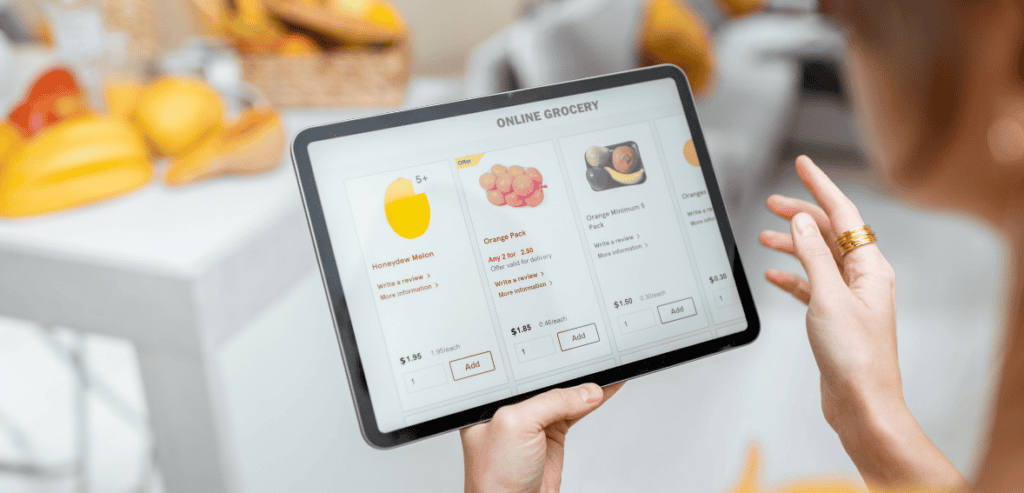
Participating in the SNAP online program is more complex than participating in SNAP at physical stores. First, the physical stores must already be participating retailers and must be allowed to accept SNAP. New retailers cannot begin by participating in SNAP online; they must first meet the regular requirements and be eligible to serve SNAP households before participating.
Next, the physical stores’ online systems, whether via the internet, mobile applications, or other electronic commerce technologies, must be updated to meet the specific SNAP online standards. The retailers’ online system must integrate EBT PIN entry via a certified third-party processor, such as Fiserv, WorldPay, or Forage. Retailers may use any processor as long as the transaction is secure and meets the required security standards.
The online system needs to adhere to SNAP rules, such as only purchasing eligible food items, allowing customers to determine how much of their benefits to use, and supporting EBT split tender online transactions for purchasing non-SNAP items or paying service fees. It should also handle refunds, errors, and pricing variations clearly, while preventing fraud, such as no guest checkout, limiting checking balances per session, and limiting changes to EBT cards. In addition, a retailer needs to submit a Letter of Intent to USDA SNAP Online Purchasing.
USDA reviews this document, and if approved, the retailer can proceed with updating their system. In some cases, a new e-commerce site needs to submit a Business Requirements Document and demonstrate its site to the USDA.
Before going online, the retailer needs to conduct end-to-end testing with USDA and other relevant agencies to ensure compliance with all online SNAP rules. Only after this process can they offer online SNAP purchases.
In simple terms, to be a SNAP retailer in a physical store, a retailer needs standard authorization, but to offer SNAP online, they need USDA approval and must ensure technical controls at the point of purchase.
Operating Policies for Online SNAP Retailers

Substitutions
Online SNAP retailers must maintain clear policies regarding substitutions. If a selected item is unavailable, the retailer must suggest an alternative SNAP-eligible product or notify the customer before fulfillment. Automatic substitutions are strictly prohibited; SNAP benefits can only be applied to eligible items explicitly chosen by the customer.
Out-of-Stocks
Online retailers must be able to handle out-of-stock items in their stores. Products that are currently unavailable must be clearly marked or removed from the online menu to avoid frustrating customers. The online store must prevent the use of SNAP benefits for products that are not available, ensuring compliance and avoiding errors in the transaction process.
Delivery Fees
While online SNAP regulations permit retailers to charge delivery and service fees, these costs cannot be covered by SNAP benefits. Customers must pay these fees using a secondary payment method, such as a credit or debit card. Retailers should clearly communicate these fees during checkout to ensure transparency and compliance.
Estimated Weights
When selling variable-weight items like produce, retailers must provide reasonable price and weight estimates. It is crucial to reconcile any differences between the estimated and actual price during the final checkout to ensure SNAP benefits are charged for the exact amount delivered. Accurate labeling and transparent pricing help prevent transaction errors and maintain customer trust.
EBT Online Refunds Processing Back to the SNAP Account
If a customer returns an item, an order is canceled, or a product is received that was not ordered, the business must ensure that any EBT online refunds for SNAP-eligible items are refunded directly to the customer’s SNAP account. The refunds are not to be made to the customer as cash or to any other account that is not a SNAP account. The refund system must be efficient, and the customer must be notified that the refund is being processed to their EBT account.
Challenges Retailers Still Face
Although the number of online SNAP purchases is increasing, many retailers still face several challenges.
The first challenge is the use of technology. Most small retail stores still lack the technology required to process online SNAP payments. This is a challenge because developing an online platform capable of processing EBT payments can be costly and complex.
Another challenge retailers face is complying with federal guidelines. In the SNAP program, benefits can only be used to purchase certain food items. Failure to comply with these guidelines can result in losing the authorization to participate in the program.
Finally, retailers face significant technical complexity in cart management. The online platform must be sophisticated enough to automatically distinguish between SNAP-eligible and ineligible items in real-time, correctly applying split-tender payments for taxes or non-eligible goods. While this level of integration is challenging for smaller businesses, evolving technology and third-party processors are making these systems more accessible and affordable.
The Harsh Consequences of Non-Compliance
If a retailer is not properly approved for online SNAP/EBT or tries to manage purchases manually, it can cause major issues for them. Errors are more likely to occur without a proper system, posing a major risk to the retailer.
In many cases, USDA authorities can ask for detailed records of transactions. If records are missing, incomplete, or unclear, it can cause an audit. These can be quite stressful for small business owners.
There can also be legal and financial consequences. Retailers can be warned or fined if they do not comply with the rules. In rare cases, a retailer can be temporarily suspended from accepting online SNAP/EBT, which can directly impact sales. In more severe cases, they can be permanently removed from the SNAP/EBT program, losing access to an important customer base that relies on EBT.
In extreme cases, if evidence of fraud or misuse exists, legal action can be taken, resulting in severe fines and damage to the store’s image.
In simple words, if your store fails to comply with online SNAP/EBT regulations, serious problems can arise. Proper implementation of processes and systems can help to prevent problems and ensure your store remains compliant and continues to serve its SNAP customers safely and effectively.
Conclusion
Having strong operational policies in place for SNAP online orders is essential to running a successful, compliant online grocery program. The policies will include guidelines on substitutions, refunds, and customer service, among other issues, and are important for ensuring the success and compliance of the online order program, as well as for creating a positive customer experience when using EBT online.
FAQs
Do online SNAP orders require extra authorization from FNS?
Yes, online SNAP orders require additional authorization from USDA FNS, even if the store is already authorized to accept SNAP in-store.
Can SNAP pay delivery or service fees online?
SNAP benefits cannot be used to pay delivery/service fees. The customer must use another payment method, not the EBT account.
How should refunds be handled for substituted items?
Refunds for substituted items must be credited back to the customer’s SNAP account to ensure the benefits are properly credited for future eligible purchases.
What happens with variable-weight items (meat/produce) online?
Variable-weight items, such as meat or produce, must be priced accurately. The online shopping system must be able to estimate item weights to ensure the correct price is calculated before completing the EBT transaction.
Are there restrictions on guest checkouts for SNAP online purchases?
It is important to ensure that guest checkouts are restricted for SNAP online purchases to avoid unauthorized use, and only EBT cardholders are allowed to make the purchase.
How are SNAP-eligible and non-eligible items handled online?
It is important to ensure that the online SNAP system is designed to separate eligible and non-eligible items and to allow split payment options when the customer purchases other items not covered by the SNAP program.