The cash register that sat on retail counters for most of the twentieth century was a remarkable piece of engineering for its time, capable of recording sales, making change, and providing a basic audit trail of transactions. But it was fundamentally a single-function tool that told the retailer almost nothing beyond how much money had been received and what was in the drawer at the end of the day.
The intelligence required to run a retail business, including what was selling and what was not, how much inventory remained, what the margin looked like on different product categories, who the best customers were and how often they came in, all of that lived in the owner’s head, in handwritten ledgers, and in periodic stock counts that were already out of date by the time they were completed.
The current generation of POS technology has revolutionized the way that retail is operated in terms of making the process of turning raw transaction data into actionable intelligence immediate and continual as opposed to manually compiled and analyzed retrospectively. Modern POS systems is truly intelligent as far as this term means anything in business terms, meaning that it converts the data produced from each transaction into information that shapes decision-making with respect to stock management, workforce deployment, pricing strategies, and relationship-building with customers.
The implementation of current POS technology solutions, even smaller independent retailers can take advantage of operational intelligence traditionally reserved for large chains, which is why retail operations have become a game-changer when it comes to competition. For retail businesses of any size, it has become critical to comprehend how modern POS works, how it differs from older generation retail technologies, and how it improves retail operations on a practical level.
Transaction Processing: The Foundation That Everything Builds On
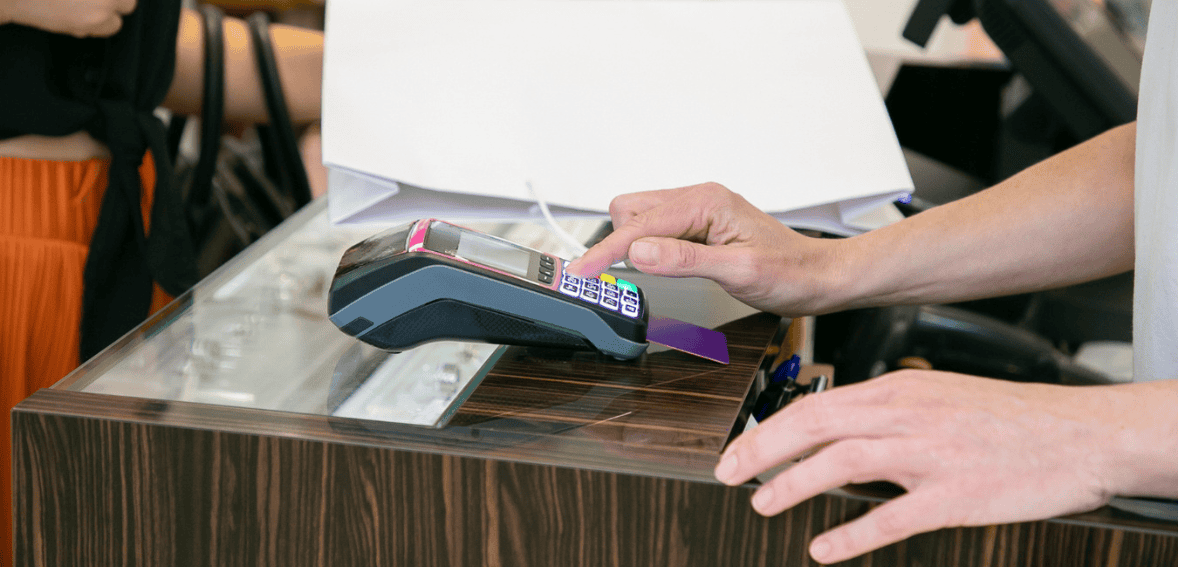
The transaction processing function remains the core of any POS system, and modern POS systems execute this function with a speed, accuracy, and payment flexibility that previous generations could not approach. Retail operations management through modern POS begins at the transaction level, where the speed and reliability of payment processing directly affect customer experience, staff efficiency, and the operational data that every other POS function depends on.
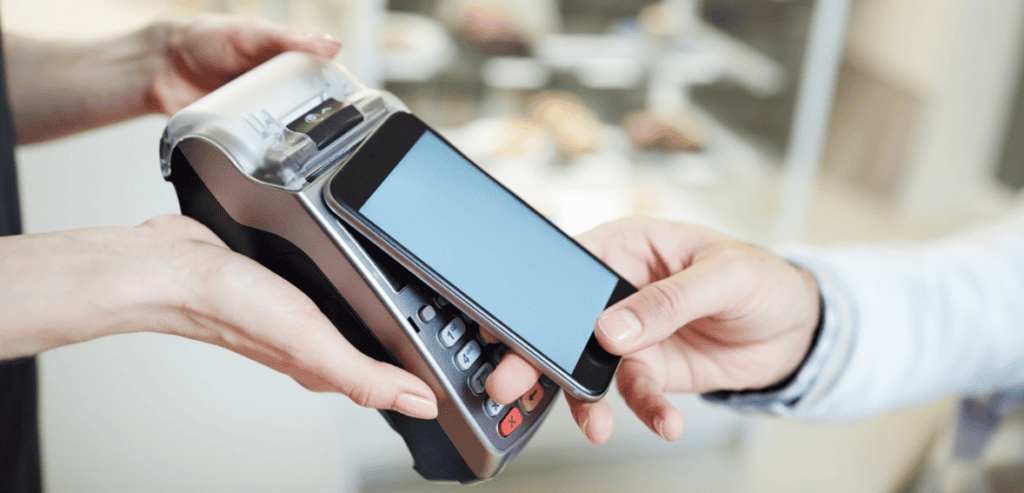
Modern POS systems support the full range of current payment methods including chip cards, contactless cards, mobile wallet payments through Apple Pay and Google Pay, QR code payments, and in some platforms cryptocurrency, without requiring separate hardware or configurations for each payment type. This payment method flexibility serves the growing customer expectation of being able to pay in whatever way they prefer rather than being constrained by the retailer’s payment infrastructure, and it ensures that payment method does not become a barrier to transaction completion for any customer whose preferred payment type is among those the system supports.
The receipt delivery capabilities of today’s POS systems have gone further than simple paper receipts via the introduction of email receipts, SMS receipts, and online delivery of receipts via customer-facing applications, whereby the receipt delivered to the customer is at once an improvement to their experience but also an opportunity for retailers to gather information which serves as the starting point for loyalty and marketing programs supported by today’s retail POS systems. POS software that reliably performs the task of transaction processing in all conceivable situations, including high volume peak periods and potential loss of network access, represents the foundation of all other POS functionality.
Real-Time Inventory Intelligence
The inventory management transformation enabled by modern POS systems is one of the most operationally significant improvements that retail technology solutions have delivered to independent retailers, because inventory accuracy and real-time visibility create competitive capabilities that manual inventory management cannot approach regardless of how carefully it is executed. Every transaction processed through a modern retail POS system automatically updates inventory levels in real time, which means that at any moment the system reflects the current actual inventory position without requiring a physical count or manual update.
This continuous real-time accuracy eliminates the inventory blind spots that manual systems create, where the gap between the last physical count and the current moment represents unknown inventory that could have been depleted by sales, damaged, or misplaced without the system reflecting the change. POS systems for retailers that include automated low-stock alerts trigger replenishment consideration when specific products fall below defined thresholds, preventing the stockouts that occur in manual systems when declining inventory is not noticed until the shelf is empty.
The sales velocity information obtained by current POS systems for each individual product, illustrating how rapidly each particular product sells compared to its inventory levels, enables the purchase of items based on true demand trends rather than assumptions, thereby ensuring the timely stocking of high-demand products while preventing over-purchasing of low-demand products. Multi-location inventory control, which provides retail stores with multiple locations access to their inventory levels at each location through a centralized management tool and helps move inventory between different locations based on inventory versus demand requirements, is a multi-location management feature that was previously attainable by major chain stores that had elaborate inventory management tools but is now provided through retail POS systems for emerging independent stores.
Customer Relationship and Loyalty Integration
Modern POS systems have incorporated the customer relationship management and loyalty program capabilities that were previously available only through separate, expensive CRM platforms, making it possible for independent retailers to know their customers as well as any large chain in terms of purchase history, visit frequency, and spending patterns. Retail operations management through customer intelligence begins at the POS when the customer’s identity is captured through loyalty program enrollment, email receipt delivery, or phone number lookup, connecting the transaction to a persistent customer record that accumulates purchase history over time.
The customer records created by collecting customer data in such an integrated manner form the basis for the specific, behavior-based marketing that works more effectively in getting customers to return than mass broadcasting-style promotion. A customer who has made four purchases over the last three months in one particular category of products, and who is also in the top twenty percent in terms of average purchase price, is a very different type of customer from someone who made one purchase six months ago, and the ability of a retail POS system to track these differences allows for marketing communications that take this into account.
By integrating a loyalty program into the retail POS software, making loyalty registration, point earning, and point redemption all seamless and automated processes within the normal course of checkout, participation rates can be significantly increased due to the removal of any barriers to participation. Retail POS software with integrated loyalty programs provides the feedback loop wherein each purchase helps build a more robust customer record, which in turn allows for more effective communication, which in turn drives additional purchases.
Analytics and Business Intelligence for Retail Decision-Making
The analytics capabilities of modern POS systems represent one of the most transformative shifts in what retail operators can know about their business and how quickly they can act on what they know. Retail operations management informed by real-time analytics can identify sales trends as they emerge rather than discovering them in retrospective monthly reports, can assess the impact of pricing changes or promotional activities within days of implementation rather than waiting for period-end analysis, and can monitor staff performance through transaction data in ways that create accountability without requiring constant supervisory presence.
Contemporary POS systems come equipped with analytics dashboards that enable retailers to analyze their sales in terms of product, category, timeframe, location, and even employee through graphical interfaces meant for laymen rather than analysts with extensive data interpretation skills.
A good retail technology system that is equipped with analytics functions will have the ability to track sales trends, indicating which categories of products are gaining or losing traction over time, margin analysis, showing how profitable each product and category is rather than their monetary contributions, basket analysis, which tracks which products customers purchase simultaneously and thus gives opportunities to offer cross-selling and bundling deals, and performance analysis for employees, showing transaction volumes, average sales per transaction, and other performance metrics by employee.
POS systems for retailers with all these analytics features available on mobile devices allow business owners and managers to monitor their performance irrespective of their location, unlike having to access business intelligence at an in-store management terminal, which comes in handy especially for multi-retail locations where visibility is critical despite the business owner or manager’s whereabouts.
Staff Management and Operational Control
The staff management capabilities embedded in modern retail POS software go significantly beyond the basic shift management of previous generations to address the full range of employee-related operational challenges that retail businesses face. Modern POS systems support individual staff logins that create accountability for every transaction, enable role-based access controls that limit each staff member’s system access to the functions appropriate to their role, and generate the performance data that informs staffing decisions and employee evaluation.
The role-based access control dimension is particularly important for operational security, because a POS system where every staff member has access to all functions including discounting, refunds, price overrides, and management reporting creates accountability gaps and fraud opportunities that individual login with role-appropriate permissions eliminates. Retail operations management through POS-based staff management also includes the ability to identify the specific staff member associated with any transaction, which allows the investigation of discrepancies, customer complaints, or unusual transaction patterns to be resolved quickly and specifically rather than requiring the review of all staff activity for a period.
Time and attendance tracking integrated within the POS system, where staff clock in and out through the same interface they use to process transactions, creates a unified record of staff hours and activity that simplifies payroll processing and provides the correlation between staff scheduling and sales performance that informs optimization of scheduling decisions. Retail technology solutions that integrate staff scheduling with sales forecasting allow labor costs to be aligned with anticipated revenue, which is one of the most impactful operational improvements available to retailers where labor is typically the largest controllable cost.
Omnichannel Integration and the Connected Retail Operation
The retail landscape has become fundamentally omnichannel, with customers expecting to shop online, in-store, and through mobile apps with consistent product information, pricing, and inventory availability across all channels. Modern POS systems are built to serve as the operational hub of this omnichannel retail environment rather than as a standalone in-store system that is disconnected from the digital channels that now account for a significant and growing portion of retail commerce.
Retail POS software with e-commerce integration connects the in-store product catalog and inventory to the online store, ensuring that product information and pricing are consistent across channels and that inventory sold online is automatically deducted from the same inventory pool that in-store transactions draw from, preventing the overselling that occurs when in-store and online inventory are managed separately.
The buy-online-pickup-in-store fulfillment model that has become a significant portion of retail transactions for many businesses requires POS integration that can receive online orders, alert in-store staff to prepare the order, and process the customer’s collection without requiring a second payment transaction or a manual order lookup.
POS systems for retailers that include this BOPIS capability give independent retailers the omnichannel operational sophistication that chain competitors offer, which has become a genuine customer expectation in many retail categories. Retail operations management through an integrated omnichannel POS platform produces unified reporting that shows the full picture of the business’s sales activity across all channels rather than separate reports for each channel that need to be manually compiled for a complete business view.
Conclusion
Modern POS systems have transformed retail store operations from a record-keeping function centered on the transaction into a comprehensive operational intelligence platform that informs every dimension of how retail businesses are managed. Retail POS software that handles transactions with speed and payment flexibility, manages inventory in real time with automated replenishment alerts, builds customer relationships through integrated loyalty and marketing capabilities, delivers business intelligence through accessible analytics dashboards, and supports omnichannel operations through e-commerce integration creates genuine competitive advantage for the retailers who have deployed it relative to those still operating on previous-generation technology.
Retail technology solutions built on modern POS platforms have democratized access to operational capabilities that were previously available only to large retail chains, giving independent retailers the tools to compete with the same operational sophistication that their chain competitors employ. POS systems for retailers that integrate these capabilities in a unified platform, rather than requiring multiple disconnected systems for different operational functions, create the data consistency and operational coherence that multiply the value of each individual capability through their interaction with the others.
The transformation of retail operations through modern POS technology is not a future development to be anticipated but a present reality available to retailers who choose to invest in it, and the retailers who make that investment are building the operational foundation for sustainable competitive performance in an increasingly demanding retail environment.