
By Julia Koroleva June 1, 2026
The decision to upgrade POS hardware is one that retail operators often postpone until the existing system forces the decision through failure or obsolescence, rather than approaching it as a proactive strategic investment in operational capability. This reactive posture produces upgrades that are driven by crisis rather than by thoughtful evaluation of what the business needs, which typically results in selecting hardware based on immediate availability and urgency rather than on fit with the business’s specific operational requirements and growth trajectory.
POS hardware upgrade considerations require much more thoughtful consideration than usual since the selected POS hardware will determine how the company deals with payments, inventory management, customer service, and generation of operational data not just for several months but for many years ahead, and the wrong decision leads to operational difficulties that turn into real costs in time.
Today, the variety of retail payment terminals available on the market is tremendous as far as technical capabilities, design, and overall integration with the payment ecosystem are concerned, and even slight differences between devices may turn out to be operationally important without an in-depth consideration of the issue. Thoughtful POS hardware selection based on honest analysis of existing deficiencies and required improvements yields much better results than purely budget-oriented or vendor-specific choices.
Diagnosing What the Current System Actually Costs
Before evaluating new POS equipment, understanding precisely what the current system is costing the business provides the foundation for a return-on-investment analysis that justifies the upgrade decision and sets a realistic expectation for what the new hardware needs to deliver. Retail operations management conversations about POS hardware upgrades often focus on the visible costs of the current system, including the hardware failures, the outdated interface, and the missing features, while underestimating the less visible costs that accumulate continuously without generating specific incidents that attribute the cost to the payment system.
The effects of transaction speed bottlenecks in terms of increased checkout times of five to ten seconds per transaction amount to real constraints in throughput, translating into either less queue traffic being handled or longer queuing times for the customers in the affected queues. The integration issues with the existing POS and its connections with the inventory management, accounting, and/or online commerce systems resulting in manually having to reconcile transactions represent labor costs that cannot be attributed to the POS line item in the budget as they show up as labor costs in operations and do not involve any direct cost from the technology perspective.
A POS solution used in retail settings that handles transactions properly but generates minimal transaction data and/or analytics will result in decision-making costs that are impossible to attribute, since the actual decisions that could have been made based on better analytics are not known to the business owner, who simply sees the decisions that were made with the available information.
Matching Hardware Form Factor to Operational Reality
The physical form factor of retail payment terminals has diversified significantly from the traditional countertop terminal model, and the right form factor for a specific retail operation depends on the physical environment of the store, the transaction patterns of the business, and the customer experience the retailer wants to create at the checkout moment. Countertop terminals remain appropriate for retail environments with defined checkout locations where customers naturally queue to complete purchases, but the range of countertop terminal designs has expanded from the basic card reader with numeric keypad to include dual-screen terminals with customer-facing displays, integrated receipt printers, and large touchscreen interfaces that provide a more capable and more engaging checkout interface for both staff and customers.
Mobile retail POS devices, such as handheld devices, tablet computers with POS software, and card readers that may be carried around by staff members allow for tableside transactions in adjacent restaurant retail operations, line-busting functionality when needed, and sales assistance within a showroom setting in which the staff helps the client select the item and checks out the client where the client stands.
POS hardware upgrade choices that take into consideration the spatial characteristics and needs of the retail location, as opposed to simply matching the form of the existing POS technology, tend to uncover mismatches between the present hardware set-up and the actual pattern of transactions, which can then be addressed. For example, a small-scale retailer that currently has countertop POS terminals resulting in a formal check-out experience contrary to the personalized service offered by the store might find that the use of tablet POS removes the barrier between the staff member and the client, allowing the former to interact more personally with the latter.
Software Ecosystem Compatibility
The hardware component of a POS upgrade decision is inseparable from the software ecosystem within which the hardware will operate, and selecting hardware without careful evaluation of the software platform it requires or supports produces the common situation where capable hardware is constrained by software that does not meet the business’s needs. POS equipment in the current market typically comes in one of three software relationship configurations: hardware that is dedicated to a specific software platform and can only run that platform’s software, hardware that runs an open operating system and can support software from multiple vendors, and hardware that includes proprietary software as the primary interface alongside the ability to run additional applications.
Payment terminals tightly integrated with specific software platforms, such as Square devices that use Square software and Clover devices that use the Clover platform, offer optimized hardware-software integration at the expense of limiting software flexibility, which is limited to features supported natively by the platform or available via the application market of the platform. Hardware designed with an open architecture and capable of running general operating systems like Android provides software flexibility at the expense of actively managing configurations so that hardware-software integration can meet payment security certification standards.
Evaluation of payment hardware upgrade should include a detailed review of the software that can be used in conjunction with the chosen hardware, covering current functionality, integration with other software systems used by the business, future development roadmap, and track record of vendors in supporting the platform.
Payment Method Coverage and Future-Proofing
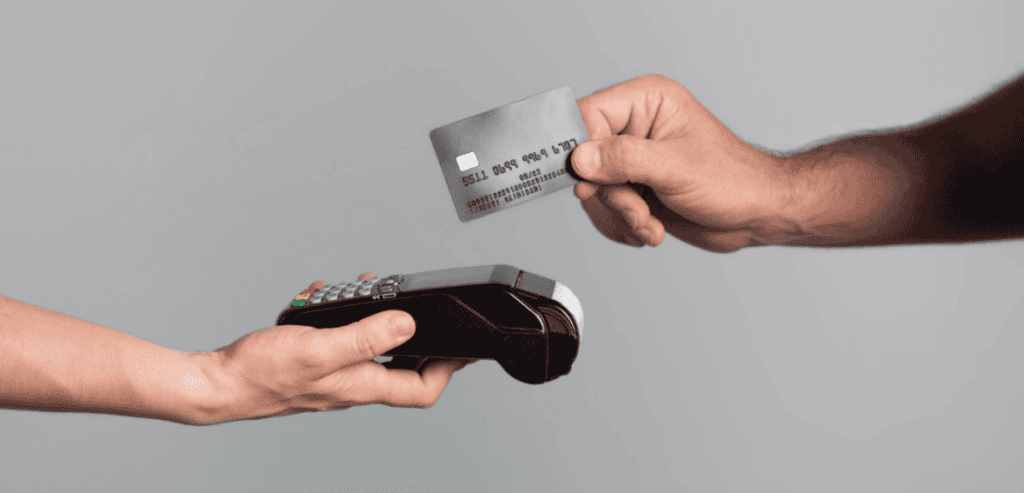
Retail checkout hardware that does not support the full range of payment methods that customers currently use and that will emerge in the near future creates a capability gap that affects customer experience from the first day of operation. POS machine for retail selection should verify that the candidate hardware supports EMV chip cards, NFC contactless payments from both physical contactless cards and digital wallets including Apple Pay and Google Pay, magnetic stripe as a fallback for the diminishing proportion of transactions where it is still needed, and PIN-based debit where relevant to the business’s customer base and transaction profile.
The future-proofing dimension of payment method coverage requires considering which payment methods are likely to become significant in the hardware’s expected service life even if they represent a small proportion of current transactions. The growth of digital wallet payments has been rapid enough that hardware purchased without NFC capability even five years ago is now creating customer experience gaps at businesses with younger or more technology-forward customer demographics.
The emerging relevance of QR code payments in specific market segments, biometric payment in select retail environments, and the potential expansion of buy-now-pay-later POS integrations all represent payment method developments that retailer operators should consider when evaluating whether candidate hardware will remain capable of meeting customer payment expectations throughout its expected useful life.
Security Certification and PCI Compliance
POS hardware upgrade decisions must include verification that candidate hardware meets current payment security certification requirements, because deploying uncertified or non-compliant hardware creates both security exposure and potential contractual violations with payment processors. Retail payment terminals that are presented for sale in the current market are generally certified for EMV chip payment processing, but the certification status of specific hardware models can change over time as security standards are updated, and hardware that was certified when purchased may require software updates or eventual replacement to maintain certification status as standards evolve.
PCI compliance for retail payment environments requires that the hardware, software, and network infrastructure collectively meet the security standards defined in the PCI Data Security Standard, and the compliance scope of different hardware configurations varies significantly based on how the hardware handles cardholder data. Point-to-point encryption capability, where card data is encrypted immediately at the point of card entry and remains encrypted throughout the payment flow until it reaches the processor’s secure decryption environment, significantly reduces the PCI compliance scope of the retail environment and simplifies the compliance validation process.
POS machines for retail that include validated P2PE support should be preferred over alternatives without this capability for the compliance scope reduction benefit alone, because simpler compliance validation reduces both the annual compliance cost and the ongoing security management burden of the payment environment.
Total Cost of Ownership Analysis
Retail checkout hardware investment evaluation that compares only upfront hardware costs produces systematically misleading results because the total cost of owning and operating a POS system over its expected useful life includes ongoing software licensing fees, payment processing costs, maintenance and support costs, and the productivity costs of system downtime and operational friction that vary significantly between systems with similar upfront costs.
POS hardware upgrade return on investment analysis that accounts for all of these cost components over a three-to-five-year horizon provides a much more accurate picture of the true cost comparison between candidate systems than upfront cost comparison alone. Software subscription costs for cloud-based POS platforms typically run between thirty and three hundred dollars per month per location depending on the feature tier, which accumulates to between one thousand and ten thousand dollars per year that must be included in the total cost of ownership calculation.
Payment processing costs, while often treated as separate from the hardware decision, are frequently tied to the hardware choice when specific hardware requires using a specific processor or limits processing options to a defined set of partners, and the processing rate difference between the best and worst options available through a specific hardware ecosystem can substantially affect total cost of ownership at meaningful transaction volumes. The productivity value of reduced transaction times, better reporting, and improved staff efficiency that better hardware produces represents a genuine offset to its higher upfront cost that should be estimated and included in the total cost of ownership analysis rather than treated as an unquantifiable soft benefit.
Conclusion
POS hardware upgrade decisions that are made through deliberate, systematic evaluation of current system costs, operational requirements, software ecosystem fit, payment method coverage, security compliance, and total cost of ownership consistently produce better outcomes than those made reactively in response to system failure or competitively in response to marketing. Retail payment terminals in the current market offer genuine capability differences that matter significantly for retail operations management, and the hardware that is right for one retail environment may be poorly suited for another with different transaction patterns, different staffing models, or different integration requirements.
POS equipment investment that is sized to the actual needs of the business rather than to the maximum available capability or the minimum available cost creates the most sustainable long-term value, and the evaluation process that surfaces the actual needs is as important as the selection decision itself. Retailers who approach POS hardware upgrades with the preparation and deliberateness that the multi-year operational impact of the decision deserves consistently find that the investment produces the operational improvements they intended while those who upgrade reactively often find themselves evaluating another upgrade sooner than they expected.