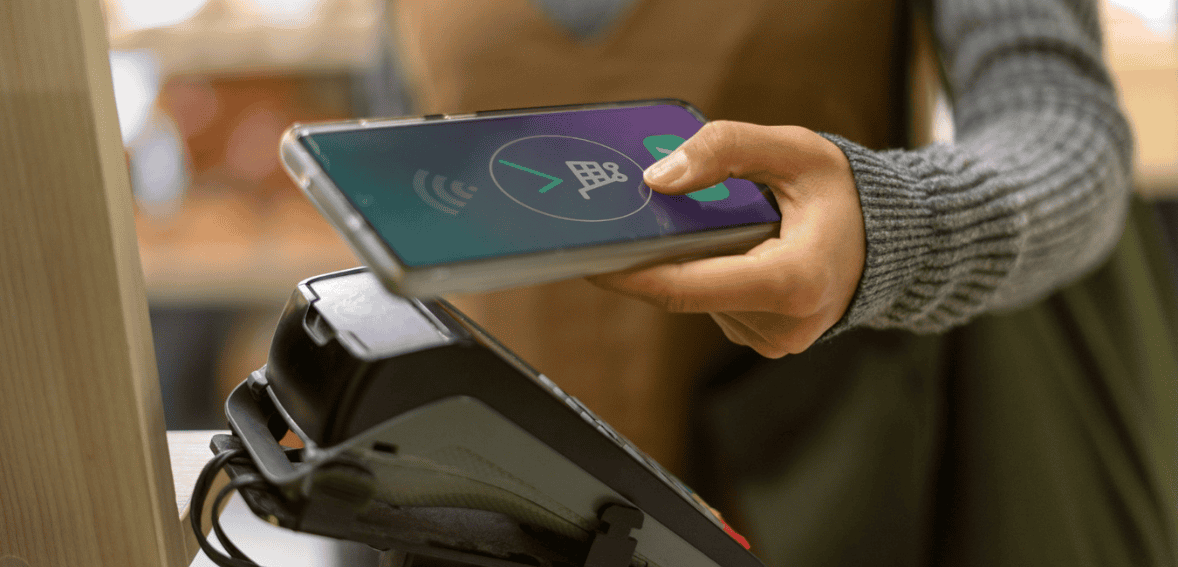
Walk into almost any independent retailer, boutique, or food service operation that has opened or significantly upgraded their technology in the past three years, and there is a good chance you will see a tablet-based setup running a cloud POS system rather than the traditional countertop terminal with its proprietary software locked inside a box that only a technician could access. This shift is not a coincidence or a trend driven primarily by aesthetics, although the cleaner physical footprint of modern cloud-based systems is genuinely appealing compared to the bulky hardware of legacy POS installations.
It is a fundamental change in how retail technology works, who controls it, what it can do, and how much it costs to deploy and maintain, and the advantages that cloud-based retail software provides over traditional on-premise systems are significant enough that the industry’s movement toward cloud POS has taken on the character of an inevitable transition rather than an optional upgrade.
POS retail technology based on cloud computing platforms does not just amount to doing what existing systems do using new technology; it makes possible functionalities that are beyond the reach of even a highly capable hardware-based system, including instant access to data from any location, automatic updates to ensure up-to-date functionality without the need for technical skills, integration into the digital ecosystem of tools required by modern retailing, and software-as-a-service pricing structures that make high-end retail technology available to businesses of all sizes.
An understanding of the reason why cloud-based POS systems have become the standard technology for retail, the unique functionalities that are possible through cloud technology, and the knowledge a retailer of whatever size needs in order to make the move to cloud technology, are the necessary ingredients to making technology decisions that will affect how retailers run their business for many years to come.
The Architecture Difference That Changes Everything
The most fundamental reason that cloud POS systems are replacing traditional on-premise systems is an architectural difference that changes not just how the software works but what the software can do. A traditional POS system stores its data, runs its software, and processes its transactions on hardware that sits in the store, typically a dedicated server in the back office or processing capability built directly into the terminal itself. When the store is closed, the data stays in the store. When the software needs updating, a technician needs to come to the store or the owner needs to manually download and install an update.
In the event of hardware failure, whatever relies on that hardware also fails until the issue with the hardware is resolved. For the businessman, if he is out of town and needs to know whether his sales are performing well, he will either make a phone call to somebody working in the store or wait for him to come back to see for himself. In cloud-based software for retail, however, the software and the database where it keeps its information run on remote servers hosted by the software provider, while the POS terminal connects to those remote servers using the internet.
This may seem like an IT matter, but it actually changes things in ways that are obvious to anybody who manages a retail business. For example, the businessman checking his sales figures from home using his smartphone, the store manager applying a discount change on all stores simultaneously, the accountant pulling up financial statements without even stepping into the store, and the software provider updating security patches on all stores in the middle of the night without having to involve anyone working in the store are all consequences of cloud computing architecture as opposed to on-premise architecture.
Real-Time Data Access and the Management Revolution
One of the most immediately appreciated benefits that retail POS technology built on cloud infrastructure provides is the ability to access real-time business data from any device with internet connectivity, which fundamentally changes the management relationship with the business for owners and operators who have been accustomed to the data visibility limitations of traditional on-premise systems. Online POS management through the dashboards and reporting interfaces of cloud POS platforms gives retail operators the kind of operational visibility during trading hours that was previously available only through physical presence or through the labor-intensive process of manually compiling reports at the end of each day.
The retailer who is able to access up-to-date sales figures for each hour and compare them against historical data on their smartphone at the same time as talking to a vendor, who is able to know which items are being sold the best on a Tuesday afternoon while placing the next week’s orders, and who can detect anomalies in sales trends in real time and act upon them instantly as opposed to waiting until the end of the week for a report are running their business on a whole different level of information availability compared to someone relying on an older system.
This is especially true of cloud POS systems offering dashboards where such information becomes accessible via mobile-friendly interfaces as opposed to having to navigate software interfaces. Continuous access to real-time information improves decision-making considerably in business, and it is important to remember that making decisions based on fresh information as opposed to old information helps tremendously when it comes to personnel, promotions, inventory, and customer service decisions.
Automatic Updates and the End of Software Maintenance
One of the operational burdens of traditional on-premise retail POS technology that cloud-based systems eliminate entirely is the software update and maintenance cycle that requires either technical staff or vendor support to keep the system current with security patches, feature improvements, and compatibility updates. Retail software solutions built on cloud architecture deploy updates automatically to all users simultaneously, which means that every merchant using the platform gets access to new features, security improvements, and bug fixes without doing anything to enable those updates and without experiencing the downtime that traditional update installations sometimes require.
Security issues in regard to automatic updates are very relevant in the context of payment processing, since software vulnerabilities resulting from old software are those weak points used by attackers when committing payment fraud; therefore, automatic updates of security patches are not only good practice, but also necessary for PCI compliance. On-premises solutions relying on manual software updates faced the risk of being behind on updates due to their inconvenience, difficulty or high costs, leading to an increasing amount of security risks.
This problem can be addressed through cloud retail solutions that have automatic updates since all users are going to run the latest version of the software with the latest security updates. As far as the feature development component is concerned, automatic updates are beneficial for POS providers in the sense that it becomes possible to release new features at any point and offer them to users straightaway, unlike the previous scenario where providers used to release version packages including several new features at once.
Integration With the Modern Retail Ecosystem
The retail technology landscape of the current era is not a single software system but an ecosystem of specialized tools that together address different dimensions of retail operation, and the ability of a cloud POS system to integrate with the other components of this ecosystem is one of the most operationally significant advantages of cloud-based architecture over traditional on-premise systems.
Online POS management platforms connect through application programming interfaces to e-commerce platforms that handle online sales, inventory management systems that track product availability across all channels, accounting software that records financial transactions in the general ledger, customer relationship management systems that maintain customer purchase history and contact information, loyalty program platforms that reward repeat purchasing, and the delivery and fulfillment platforms that power the home delivery and buy-online-pickup-in-store capabilities that modern retail customers expect.
Retail software solutions built on cloud architecture support these integrations through standardized API connections that are maintained by the integration partners rather than requiring custom development work from the merchant, which means that the integration between a cloud POS and the other tools in the retail stack is generally reliable, current, and accessible without technical expertise.
The practical value of this ecosystem integration is visible in operational scenarios that are common in modern retail: an online order placed through the e-commerce store automatically reduces available inventory in the POS system so the same unit cannot be sold twice, a loyalty program credit is applied in real time when a purchase is completed at the POS terminal, and a day’s sales transactions are automatically entered into the accounting system without any manual bookkeeping required. Each of these automations represents time saved, errors prevented, and information quality improved in ways that compound across the thousands of transactions a retailer processes over the course of a year.
Multi-Location Management and Scalability
The scalability advantage of cloud-based retail software is most visible in the context of businesses that operate multiple locations, where the traditional on-premise architecture required separate hardware, separate software installations, and separate support arrangements for each location that made consistent management across locations both technically complex and operationally demanding. Cloud POS system platforms designed for multi-location retail provide a centralized management environment where pricing, product catalog, promotional configurations, and staff permissions are managed once and applied across all locations automatically, which is a capability difference so significant that multi-location retailers who have made the transition from on-premise to cloud POS almost universally describe it as transformative.
Retail POS technology that allows a retail chain owner to update the price of a product across all twenty locations in the time it takes to make a single change in the central management console, and to have that change reflected in all locations immediately, represents an operational efficiency gain that changes how multi-location retail management works rather than simply making the same management work slightly faster.
The scalability dimension extends to the process of adding new locations, because a cloud POS system can be deployed at a new location by configuring the existing account rather than installing and configuring new server hardware, which reduces both the time and the cost of expansion in ways that meaningfully change the economics of retail growth. Online POS management for growing retail businesses means that the technology infrastructure grows with the business without requiring proportionate increases in technical complexity or technical support resources, which is one of the most compelling arguments for cloud-based architecture for retailers who are in or planning for growth mode.

Inventory Management Across Channels and Locations
Inventory management is the operational function where cloud-based retail software creates some of its most concrete and most financially significant improvements over traditional on-premise systems, because the real-time inventory visibility that cloud architecture enables changes the quality of inventory decisions throughout the business day rather than only at the point of periodic manual count or end-of-day reconciliation.
Cloud POS system inventory management that updates stock levels in real time with each transaction means that the inventory record at any moment reflects actual current stock rather than a snapshot from the last count that may be hours or days out of date, which prevents both the overselling that occurs when out-of-stock items are sold because the system shows them as available and the overbuying that occurs when purchasing decisions are made without accurate current inventory information.
Retail software solutions that integrate POS inventory management with purchasing and supplier management allow reorder triggers to be set at specific stock levels and purchase orders to be generated automatically when inventory falls below those thresholds, which transforms inventory replenishment from a reactive process that begins after stockouts occur to a proactive process that prevents them.
For retailers operating across multiple channels, the inventory synchronization that cloud-based retail software provides is particularly valuable because it ensures that the same inventory is not simultaneously available for sale in the physical store, on the e-commerce website, and through delivery platforms without adjustment for what has actually been sold, which is the source of the inventory errors that create the customer experience failures of receiving cancellation notices after placing orders that the system should not have allowed.
The Economics of Cloud POS for Retailers
The pricing model of cloud-based retail software represents a meaningful shift from the economics of traditional on-premise POS systems that has made enterprise-grade retail technology accessible to businesses that could not previously justify the investment in legacy systems. Traditional POS systems required significant upfront capital investment in server hardware, proprietary terminal hardware, software licensing fees, and installation and configuration costs that could total tens of thousands of dollars for a single location before the first transaction was processed.
Cloud POS system pricing follows the software-as-a-service model where businesses pay a monthly or annual subscription fee that covers the software, the hosting infrastructure, and typically the ongoing support and update maintenance that the subscription service includes, with hardware costs that have declined substantially as tablet-based systems have replaced proprietary terminal hardware.
The total cost of ownership comparison between cloud-based and traditional on-premise systems consistently favors cloud systems over typical hardware refresh cycles, because the elimination of on-premise server hardware, the reduction in technical support requirements, and the inclusion of updates and maintenance in the subscription price offset the ongoing subscription cost in ways that make cloud systems financially attractive even when the subscription adds a recurring cost that traditional systems did not carry after the initial investment.
Online POS management platforms at the entry level are accessible to very small retailers at monthly costs that are comparable to basic business services rather than enterprise technology investments, which has democratized access to inventory management, analytics, and integration capabilities that were previously available only to larger retailers with dedicated IT resources and enterprise technology budgets.
Security and Compliance in the Cloud
The security of payment data in cloud-based retail software is a concern that some retailers raise when evaluating the transition from on-premise to cloud systems, and addressing it honestly requires understanding both the specific security implications of cloud architecture and the security reality of traditional on-premise systems that the concern sometimes overlooks. Cloud POS system providers who serve the retail payments market are required to maintain PCI DSS compliance for their cloud infrastructure, which means they are subject to regular security audits, required to implement specific security controls for payment data protection, and held to security standards that most individual retailers would find extremely difficult and expensive to meet with on-premise infrastructure managed with their own resources.
The security investment that major cloud POS providers make in their infrastructure, including dedicated security engineering teams, continuous monitoring, penetration testing, and the rapid deployment of security patches when vulnerabilities are discovered, represents a level of security capability that individual retail businesses cannot replicate independently.
Retail software solutions that include point-to-point encryption and tokenization for payment data processing ensure that sensitive card data is never stored in the merchant’s own systems in usable form, which reduces the scope and cost of PCI compliance for the merchant while providing stronger protection against the payment data breaches that have affected retailers using less secure payment processing approaches.
The data backup and disaster recovery capabilities of cloud-based retail software, where data is continuously replicated across geographically distributed data centers and where recovery from hardware failure or other disaster is measured in minutes rather than days, also represent a security and resilience advantage over on-premise systems where a single hardware failure can result in significant data loss.
Choosing and Transitioning to a Cloud POS System
The practical process of evaluating and transitioning to a cloud POS system benefits from a structured approach that addresses the specific requirements of the business rather than selecting based on brand recognition or peer recommendation alone. Retail POS technology selection should begin with a clear inventory of the current system’s limitations and the specific capabilities that the new system needs to provide, because the cloud POS market offers platforms with meaningfully different strengths in areas including inventory management depth, integration ecosystem breadth, multi-location management capability, and food service versus retail optimization.
Retailers with complex inventory requirements including variable products, multiple suppliers, and detailed cost tracking have different needs from those whose primary requirement is fast transaction processing and loyalty program integration, and the platform that best serves each of these profiles is not the same. The integration requirements of the business deserve particularly careful attention because the value of a cloud-based retail software implementation depends significantly on the quality of its integrations with the other tools the business uses, and discovering after implementation that a critical integration is unavailable or unreliable creates problems that are costly to resolve.
The transition process from an existing system to a new cloud POS system requires careful planning around data migration, staff training, and the timing of the cutover to minimize disruption to ongoing operations, and the support available from the new platform provider during this transition period is an important selection criterion alongside the platform’s ongoing capabilities.
Conclusion
Cloud-based POS systems have become the retail standard not because of a marketing campaign or an industry trend but because they provide genuine, operationally significant advantages over traditional on-premise systems that retailers at every scale recognize when they experience them directly. Cloud POS system capabilities including real-time data access from anywhere, automatic updates that keep the system secure and current, seamless integration with the full ecosystem of modern retail tools, and the economics of subscription pricing that makes enterprise-grade technology accessible to independent retailers have collectively created a value proposition that on-premise systems cannot match.
Retail POS technology built on cloud infrastructure changes not just how transactions are processed but how retail businesses are managed, how inventory is tracked, how multiple locations are coordinated, and how retailers can grow without the technology infrastructure constraints that on-premise systems impose.
Cloud-based retail software that is selected thoughtfully, implemented carefully, and used fully provides the operational foundation for retail businesses that want to compete effectively in a market where the quality of technology infrastructure increasingly determines the quality of the customer experience, the efficiency of operations, and the accessibility of the business intelligence that informs the decisions that determine whether a retail business thrives or struggles. Online POS management through well-designed cloud platforms is not the future of retail technology. It is the present standard, and the retailers who have embraced it are operating with advantages that those still on legacy systems are working against every day.