
By Julia Koroleva July 14, 2026
Retail businesses operate in an environment where speed, accuracy, and customer satisfaction are closely connected. Every transaction at the checkout counter represents more than a simple exchange of money for products. It is an opportunity to build customer trust, maintain accurate financial records, and ensure smooth daily operations. Even a small billing mistake can create confusion for customers, disrupt inventory records, delay payments, and reduce confidence in a business. As retailers handle hundreds or even thousands of transactions every day, minimizing billing and payment errors has become an essential part of running a successful operation.
POS Billing systems in the past were mostly manual or even paper-based in nature. Even though they have proven their value through years of existence, such systems still contained a lot of room for human errors. Such factors as pricing inaccuracies, double counting, math calculations problems, forgotten discounts, wrong tax applications, and even payment miscalculations could happen in such circumstances, especially during the sales rush. Not only did they affect the consumer experience, but also created additional accounting problems, inventory problems, and wasted lots of time on resolving them.
Today, thanks to modern POS technologies, things have drastically changed. Nowadays systems do not simply process the payment anymore, but integrate sales, inventory, pricing, customer information, reporting, and payment processing in one system that performs all the previously manually performed actions. Thanks to increasing transaction accuracy and decreasing opportunities for human error, the modern POS billing system has become one of the most useful tools in the possession of modern retailers. The understanding of how these billing systems help increase payment accuracy in retail, reduce checkout errors, provide enhanced retail transaction management, and give numerous POS software benefits will show the importance of digital billing technology.
Why Billing Accuracy Matters in Retail
Every retail transaction affects multiple aspects of a business simultaneously. When a product is sold, the transaction updates inventory levels, records revenue, applies taxes, adjusts customer information where applicable, and generates financial reports. If any part of this process contains an error, the consequences may extend well beyond a single sale.
Customers expect pricing displayed on shelves, advertisements, and websites to match the amount charged at checkout. Even minor discrepancies can create frustration and reduce confidence in the retailer. Repeated billing mistakes may discourage customers from returning, especially when competing businesses offer more reliable shopping experiences.
From an operational perspective, inaccurate billing affects profit margins, inventory planning, accounting records, tax reporting, and supplier ordering decisions. Maintaining high retail payment accuracy therefore protects both customer relationships and internal business performance. Reliable billing processes also reduce the time employees spend correcting mistakes, allowing greater focus on customer service and sales.
Common Causes of Billing and Payment Errors
Billing errors happen due to various reasons, especially in companies using manual methods. The cashiers may end up entering wrong prices, scanning more than once, using the wrong discount code, and failing to use promotions during busy periods.
Inconsistency in pricing may lead to other types of mistakes. If there is no prompt update of the shelf prices after promotions, consumers may be presented with prices which do not match those expected at checkout time. The manual management of inventory may cause more issues since wrong product details get into the system.
Payment processing causes other errors like entry of wrong payments, duplicates on cards, cashing mistakes, and incomplete payment entries among others. A modern POS billing system eliminates many of these errors since it automates most processes of checking out.
What Is a Modern POS System?
The POS system is the hardware-software package that performs transactions at the retail store. Whereas the previous cash register would simply keep track of sales, the current POS software packages incorporate various aspects of the business process within one digital system.
This includes a bar code scanner, touch screen interface, receipt printer, payment device, inventory database, customer data manager, report interface, and cloud computing capability. Each transaction performed instantly keeps the record updated in terms of inventory, finance, and sales without double-entry of data.
Aside from performing the payments, a billing POS system manages such processes as pricing, promotions, access controls, customer loyalty, refund/exchange of merchandise, tax calculation, and reporting.
Automating Price Accuracy at Checkout
The biggest advantage that comes with POS systems is the automatic pricing mechanism. Prices of the products stored in the system ensure that there is no need for cashiers to memorize or enter them manually at the time of every purchase. Scanning barcodes helps to get correct prices of products straight from the database.
With the start or ending of promotion schemes, prices can be easily updated without the trouble of changing them in every purchase. It guarantees that prices remain the same in all checkout counters and saves people from confusion.
Automatic pricing plays an important role in minimizing the errors that occur during checkouts because of incorrect manual entry during busy times. This results in accurate pricing for customers and prevents any losses faced by the retailer due to incorrect charging of customers.
Improving Retail Payment Accuracy
Payment processing should be done with great accuracy. There are different ways through which payments can be processed in the case of retail firms, like cash, debit card, credit card, e-wallets, gift card, loyalty points, mobile application and other payment types. Doing payment processing manually makes things complicated for retailers.
Modern POS systems do automatic calculations of payments, change amount, taxes, discounts, and charges depending on business rules set beforehand. This makes payment processing in the retail sector much more accurate and reduces chances of making any calculation mistakes.
Integrated payment processing helps to avoid duplicate payments and incompleteness in payment information. Payment processing is made using computerized documentation, which helps in accounting and reduces time needed for resolving disputes and financial reports preparation.
Reducing Human Error Through Automation
While human error will always exist within any business organization, the use of technology can minimize such errors. Rather than depending on their memory or doing the math on paper, employees use the standard digital processes that ensure all transactions are done in the same way.
The elimination of manual entry of products is achieved through barcode scanning. The automated calculation of taxes minimizes errors made while doing the math manually. Automated payment processing minimizes cash handling errors. Also, validation functions identify any abnormal transactions made.
Automation also speeds up the process of training new employees. Rather than committing to memory different codes or prices of the products available, employees simply need to depend on digital prompts.
Inventory Synchronization and Billing Accuracy
Inventory management and billing are closely connected. Every sale should immediately reduce stock levels to ensure inventory records remain accurate. Manual inventory updates often create delays or discrepancies that eventually affect purchasing decisions and stock availability.
A modern POS billing system automatically updates inventory after every completed sale. This real-time synchronization helps retailers monitor stock levels, identify fast-moving products, and avoid selling unavailable inventory.
Accurate inventory also supports retail transaction management by ensuring product information remains current across all sales channels. Whether customers shop in-store or online, synchronized inventory reduces overselling while improving order fulfilment accuracy.
Managing Discounts and Promotional Campaigns
Retail promotions attract customers but can complicate checkout processes if discounts are applied manually. Percentage discounts, fixed-price offers, buy-one-get-one promotions, seasonal campaigns, loyalty rewards, and coupon codes all introduce opportunities for billing errors.
POS systems automate promotional calculations based on predefined rules. Eligible discounts are applied consistently, minimizing confusion for both employees and customers. Retailers maintain greater control over promotional pricing while ensuring every customer receives the intended offer.
This automation supports ongoing checkout error reduction by eliminating subjective interpretation of promotional conditions. Businesses also gain better reporting on campaign performance because discounted transactions remain accurately categorized within sales records.
Supporting Multi-Location Retail Operations
Businesses operating multiple stores face additional challenges maintaining pricing consistency and operational accuracy. Different locations may previously have relied on separate pricing files, inventory records, or manual reporting methods.
Cloud-based POS platforms centralize pricing, inventory, product information, and promotional campaigns across every location. Updates made at headquarters become available throughout the retail network without requiring manual adjustments at individual stores.
Centralized retail transaction management improves consistency while reducing administrative complexity. Business owners gain better visibility into sales performance, inventory movement, and payment activity across every location from a single reporting platform.
Improving Customer Confidence
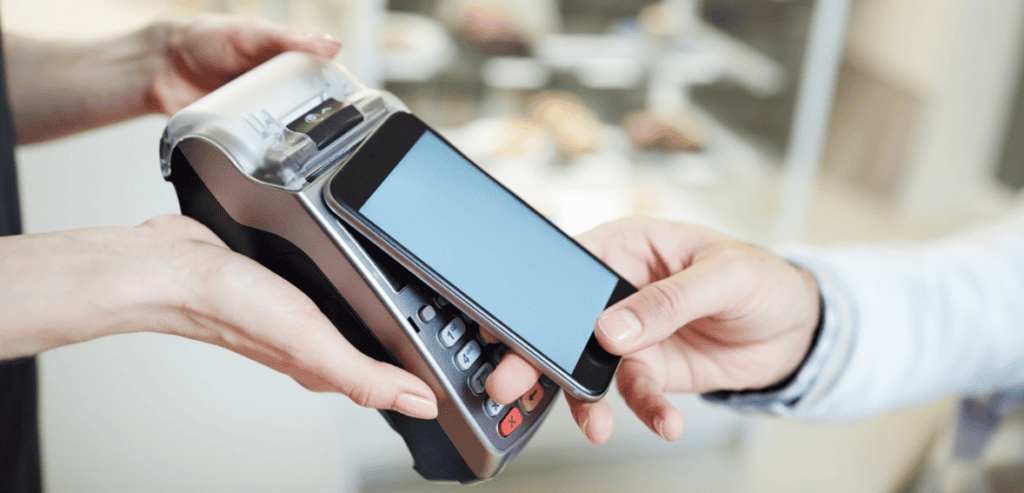
Customers notice when checkout processes are fast, accurate, and professional. Reliable billing reduces waiting times while minimizing awkward situations involving pricing corrections or payment disputes. These positive experiences encourage repeat business and strengthen customer loyalty.
Digital receipts, transparent pricing, and accurate transaction records further reinforce trust. Should questions arise after purchase, retailers can quickly retrieve transaction histories rather than relying on handwritten records or memory.
Improved retail payment accuracy therefore contributes directly to customer satisfaction. People are more likely to recommend businesses that consistently provide smooth and reliable checkout experiences.
Simplifying Returns and Refunds
Returns and exchanges present another opportunity for billing errors if transaction records are incomplete or inaccurate. Manual receipt verification and handwritten documentation often slow the refund process while increasing administrative workload.
POS systems maintain detailed transaction histories that simplify product verification, refund eligibility, payment reversal, and inventory adjustments. Employees can quickly locate original purchases and process returns according to established business policies.
Efficient return processing supports both customer satisfaction and effective retail transaction management. Accurate records also reduce opportunities for fraudulent returns while ensuring financial reporting remains consistent after refunds are completed.
Real-Time Reporting for Better Decision-Making
Retail success depends on timely access to accurate business information. Manual reporting often requires employees to consolidate multiple spreadsheets, receipts, and accounting records before meaningful analysis becomes possible.
Modern POS platforms generate real-time reports covering sales performance, payment methods, inventory movement, employee productivity, promotional effectiveness, and customer purchasing behaviour. Business owners can monitor daily operations without waiting for manual summaries.
These reporting capabilities represent one of the most valuable POS software benefits because they support faster, data-driven decision-making. Retailers can identify operational issues, pricing inconsistencies, or inventory shortages before they become larger problems.
Supporting Employee Accountability
Retail environments often involve multiple employees sharing checkout responsibilities throughout the day. Without accurate transaction tracking, identifying the source of billing discrepancies can become extremely difficult.
POS systems assign transactions to individual employee accounts, creating clear accountability for every sale, refund, price adjustment, and payment activity. Managers gain greater visibility into employee performance while identifying additional training needs where appropriate.
Employee accountability also contributes to checkout error reduction because staff members become more attentive when transaction histories remain transparent and traceable. Businesses benefit from improved operational discipline while maintaining fair performance evaluation processes.
Strengthening Security and Fraud Prevention
Billing errors sometimes result from intentional fraud rather than accidental mistakes. Unauthorized discounts, fake refunds, altered prices, and manipulated payment records can create significant financial losses if adequate controls are absent.
Modern POS systems include permission controls, transaction logs, manager approvals, and audit trails that limit unauthorized activities. Sensitive functions such as refunds or price overrides may require supervisory authorization before completion.
These security features represent important POS software benefits because they protect both business revenue and operational integrity. Comprehensive transaction records also simplify investigations whenever unusual activity occurs.
Integrating Online and Offline Sales
Many retailers now operate both physical stores and ecommerce platforms. Maintaining separate billing systems often creates inventory inconsistencies, pricing differences, and reporting complications between sales channels.
Integrated POS platforms synchronize inventory, product information, customer data, and transaction records across online and offline environments. Customers experience consistent pricing while businesses maintain centralized operational control.
Unified retail transaction management supports omnichannel retail strategies by ensuring every transaction contributes to accurate inventory, financial reporting, and customer records regardless of where purchases occur.
Long-Term Benefits Beyond Error Reduction
Although preventing billing mistakes remains a major advantage, modern POS systems deliver value far beyond transaction accuracy. Businesses improve operational efficiency, strengthen inventory management, simplify accounting, enhance customer service, and gain better visibility into daily performance.
As retailers grow, scalable POS solutions continue supporting expanding product ranges, additional store locations, evolving payment technologies, and changing customer expectations. Cloud connectivity, software updates, and integration capabilities allow businesses to adapt without replacing entire operational systems.
These long-term POS software benefits make digital billing systems strategic investments rather than simple checkout tools. Retailers gain stronger operational foundations that support sustainable business growth while continuously improving customer experiences.
Choosing the Right POS System
Selecting an appropriate POS solution requires careful consideration of business size, industry requirements, customer expectations, and future growth plans. Small retailers may prioritize affordability and ease of use, while larger organizations often require advanced inventory management, analytics, and multi-location capabilities.
Businesses should evaluate reporting functions, payment compatibility, inventory features, integration options, customer support, software updates, and security standards before making implementation decisions. Employee training and ongoing technical support also influence long-term success.
The most effective POS billing system is one that aligns with operational needs while remaining flexible enough to support future expansion. Investing time in selecting the right platform helps maximize business value over many years.
Conclusion
Accurate billing forms the foundation of successful retail operations. Every correctly processed transaction strengthens customer trust, improves financial reporting, maintains reliable inventory records, and supports efficient daily operations. Manual billing processes often introduce unnecessary risks that become increasingly difficult to manage as businesses grow. Modern retail technology has transformed this situation by making accuracy, automation, and operational visibility standard features rather than optional advantages.
A well-designed POS billing system improves retail payment accuracy through automated pricing, integrated payment processing, inventory synchronization, and detailed transaction records. These capabilities support ongoing checkout error reduction, allowing retailers to provide faster, more reliable customer experiences while minimizing costly administrative corrections. At the same time, centralized retail transaction management gives business owners greater control over sales, inventory, employee activity, and financial reporting.
The long-term POS software benefits extend far beyond preventing billing mistakes. Better reporting, stronger security, improved customer service, simplified returns, and scalable business operations position retailers for sustainable growth in an increasingly competitive marketplace. As consumer expectations continue evolving, investing in modern POS technology has become one of the most practical ways for retailers to improve accuracy, increase efficiency, and build lasting customer confidence.